Chapter I
The River
Egypt, from before the pharaohs
Watch this chapter 2:12 in the filmRuns 2 min 15 s
Summary
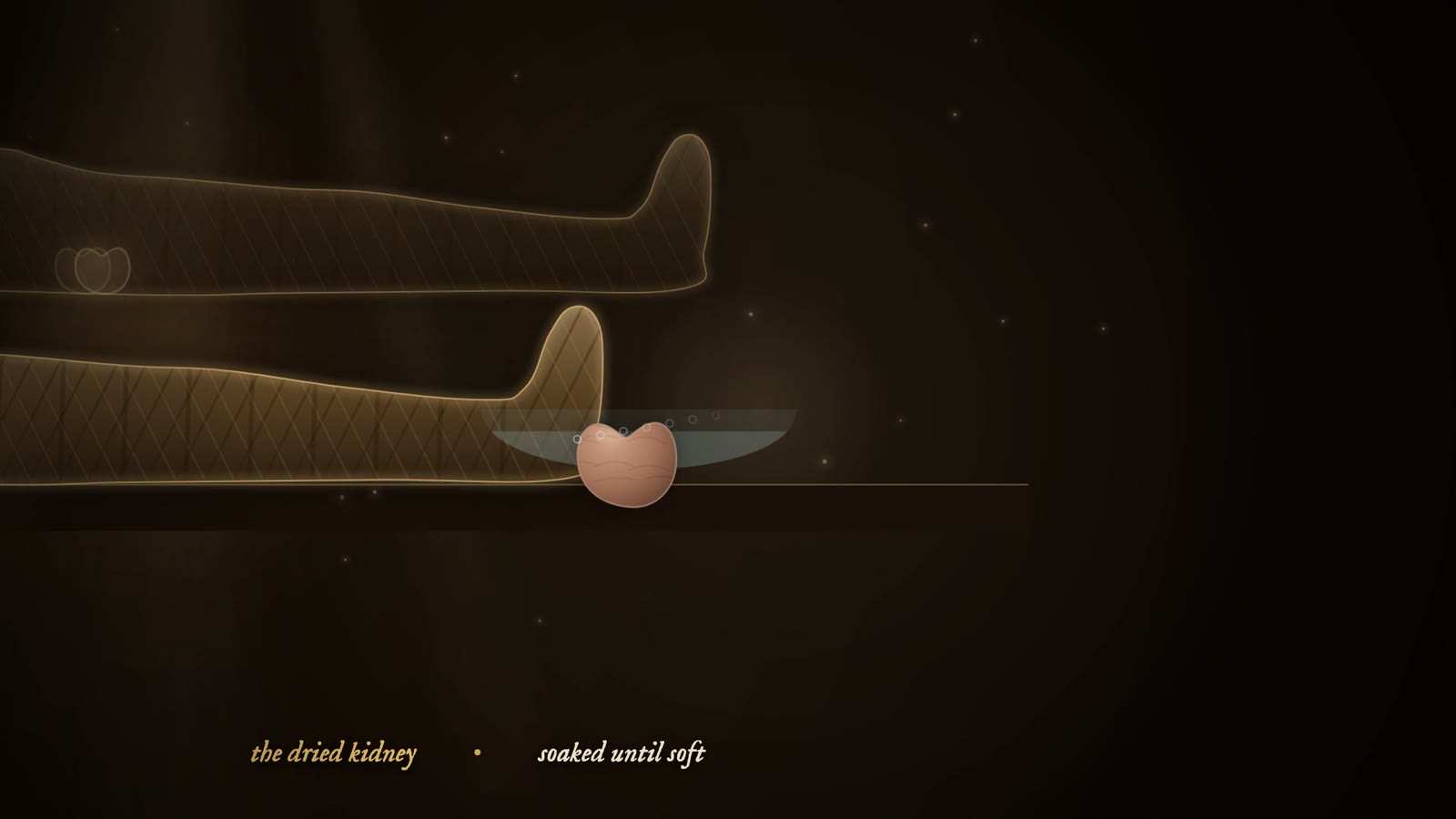
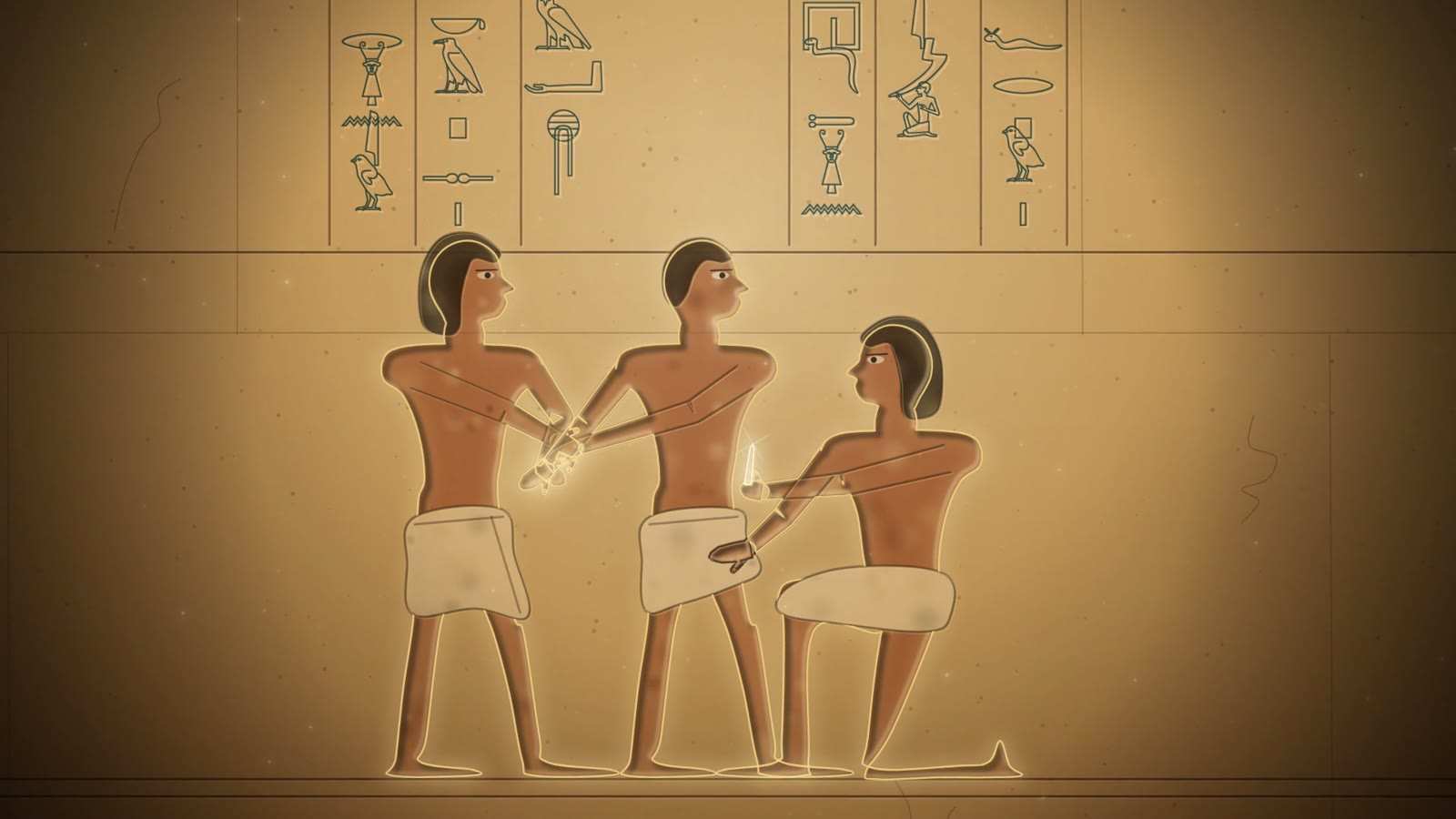
Chapter I asks what Egyptian evidence can and cannot show about urinary disease. Egypt's medical papyri include remedies for blood in the urine, a complaint still common along the Nile because of the blood fluke Schistosoma haematobium. Theodor Bilharz found the adult fluke at an autopsy in Cairo in 1851. In 1910 Marc Armand Ruffer, professor of bacteriology at the Cairo medical school, softened the dried kidneys of two mummies of the Twentieth Dynasty enough to cut them for the microscope, and found calcified eggs of the parasite. The infection was therefore present some three thousand years earlier; whether it explains the bloody urine of the papyri is a likely inference, not a proof. The chapter then turns to a relief in the Sixth Dynasty tomb of Ankhmahor at Saqqara, usually read as the oldest picture of circumcision; at least one Egyptologist has asked whether it shows an emergency operation instead, and the captions have not been settled by a checked translation. It closes with the film's first statement of its lesson. The story that Egyptians drew off urine through hollow reeds is often repeated, but no papyrus read for the film describes it and no such instrument has been securely identified.
Watch, shot by shot
-
-
-
-
-
What the film says, and the evidence
Verified claims are shown plain. probable means one reliable source; disputed means the sources disagree, and both versions are shown. Unverified material is not published here.
-
Egypt's surviving medical papyri mention blood in the urine many times. probable
Sources- BAUS Virtual Museum: Ancient Egypt Museum or society
BAUS lists ten medical papyri and says haematuria is mentioned many times in the papyri. The film's remedies for blood in the urine, and for urine that will not come, are not verified in the kit (see GAPS.md). Dossier 01 §2.1 places the mentions in the Ebers papyrus, which BAUS does not.
-
Infection with Schistosoma haematobium remains endemic in Egypt and was very probably present in ancient times. probable
Sources- BAUS Virtual Museum: Ancient Egypt Museum or society
BAUS Virtual Museum. BAUS also says that haematuria, probably the result of this infection, is mentioned many times in the papyri. The film's 'blood in the urine has long been common along the Nile' is not stated by the source (see gaps).
-
In 1851, in Cairo, Theodor Bilharz found the fluke now called Schistosoma haematobium. probable
Sources- Wikipedia: Schistosoma haematobium Secondary
He found the adult fluke at an autopsy at the Kasr el-Aini Hospital and published it in 1852 as Distomum haematobium (Wikipedia). The film calls it a blood fluke that lives in the veins around the bladder; the kit does not source that description (see gaps).
-
In a paper of 1910, Marc Armand Ruffer reported calcified eggs of Schistosoma haematobium in the kidneys of two mummies of the Twentieth Dynasty.
Sources- Ruffer 1910, Note on the presence of 'Bilharzia haematobia' in Egyptian mummies of the Twentieth Dynasty (BMJ 1910;1:16) Primary
- Egyptian canopic jars at the crossroad of medicine and archaeology (review) Secondary dead link
- Ruffer 1921, Studies in the Palaeopathology of Egypt (ed. Moodie) Primary
- Archaeopress, Palaeopathology in Egypt and Nubia (sample) Secondary
Ruffer devised methods of rehydrating ancient tissue for microscopy (Archaeopress; Ruffer 1921). The sources read do not say how these two kidneys were prepared, so the film's soaking and thin cutting are not shown here (see gaps); the research dossier also speaks of the microscopy as 1909 to 1910 (see conflicts). Some popular accounts wrongly place the discovery in the 1970s.
-
The infected mummies belonged to the Twentieth Dynasty, which Ruffer dated to 1250 to 1000 BC.
SourcesThe range is in the title of Ruffer's 1910 paper, and Wikipedia gives the same range. The film's 'three thousand years before' is a round figure taken from this range, not a source statement.
-
The BAUS Virtual Museum attributes the haematuria mentioned in the papyri, as probable, to schistosome infection. probable
SourcesRuffer's finding shows the infection in Egypt by the Twentieth Dynasty. No source read makes the link to the papyri more than probable, in keeping with the film's 'we cannot be certain'. Identifying any named disease of the papyri with schistosomiasis is not verified in the kit.
-
A relief in the tomb of Ankhmahor at Saqqara, of the Sixth Dynasty, has been described as the oldest known record of circumcision. probable
Sources- JTA Jewniverse 2016: The oldest circumcision in the world Secondary
- BAUS Virtual Museum: Ancient Egypt Museum or society
JTA (2016) places the tomb in the Sixth Dynasty, in the pyramid compound of Teti at Saqqara, dates it to about 2400 BC and calls the scene the oldest circumcision. BAUS calls the operation ritual and among the oldest recorded, though it calls the tomb a temple. Neither says the scene is 'usually' so read, and the film's date of about 2300 BC differs (see conflicts and gaps). The film's description of the figures is not checked against an Egyptological edition.
-
A paper by Kanawati in the Bulletin of the Australian Centre for Egyptology asks, in its title, whether the Ankhmahor circumcision scene is the first record of emergency surgery. probable
Sources- Kanawati, The circumcision scene in the tomb of Ankhmahor: the first record of emergency surgery?, Bulletin of the Australian Centre for Egyptology (title only read) Secondary
Only the title was read; the paper's argument is not known from the kit, and no source read describes Kanawati. The film's 'at least one Egyptologist' rests on this title (see gaps).
-
No source read for the film documents a catheter in an Egyptian medical papyrus or a securely identified Egyptian catheter; the earliest securely documented catheters in the film's sources are Roman. probable
Sources- BAUS Virtual Museum: Ancient Egypt Museum or society
- Celsus, De Medicina 7.26, tr. W. G. Spencer (Perseids) Primary
- Penn Museum MS3594: cast of a male catheter found at Pompeii Museum or society
This is an absence of evidence in the sources read. The papyri themselves were not read, and two pages that might have addressed Egyptian catheters could not be opened. A Wikipedia summary repeats the reed story without a primary citation (see the myth entry and conflicts).
Myths corrected
-
False. Schistosome eggs were first found in Egyptian mummies in the 1970s.
-
False. The Saqqara circumcision relief is in the temple of Ankhmahor.
-
Unsupported. The ancient Egyptians drew off urine through hollow reeds, or through bronze or gold tubes.