Chapter VI
The Stone-Cutters
Italy, Switzerland, France, the Netherlands, England, America, 1520 to 1909
Watch this chapter 26:32 in the filmRuns 7 min 09 s
Summary
Chapter VI returns to the stone and to those who cut for it. It opens at Norwich, where the Norfolk and Norwich Hospital operated on about 1,500 patients for stone between 1772 and 1909 and kept every stone with its register entry. The series ends because endemic childhood bladder stone vanished from Norfolk; a dietary cause in early childhood fits the evidence, but the mechanism was never proven. Cutting for the stone was a trade, and a good method was family property: the Colots of France practised for some eight generations. Around 1520 de Romanis devised the Marian operation, published by his pupil Mariano Santo, which used a grooved staff and so many instruments that it was called the greater apparatus. In the mid-sixteenth century Pierre Franco opened a child's bladder above the pubis, then advised others not to. Frère Jacques Beaulieu brought a lateral perineal approach to Paris in 1697 with poor early results, and the chapter uses the nursery round to show a myth at work. Rau of Amsterdam and William Cheselden refined the lateral operation, and Cheselden published 213 cases with 20 deaths, set out by age. The chapter closes with two patients' records: Samuel Pepys's diary of his operation and his stone, and Benjamin Franklin's 1752 letter on a flexible catheter for his brother.
Watch, shot by shot
-
-
-
-
-
-
-
-
-
In their words
“No one ever endured more anxiety and sickness before an operation, yet from the time I began to operate, all uneasiness ceased; and if I have had better success than some others, I do not impute it to more knowledge, but to the happiness of a mind that was never ruffled or disconcerted, and a hand that never trembled during any operation.”
The film starts mid-sentence: Cheselden opens "If I have any reputation in this way, I have earn'd it dearly, for no one ever endured...". Spelling modernised ("ceas'd" to "ceased"). Archive.org scan pages 431-432; Payne (2007) cites the same passage at p. 334 of the 1741 book.
- Cheselden, The Anatomy of the Human Body, 1741 (archive.org full text) Primary
- L. Payne, With Words and Knives, 2007, p. 79 Secondary
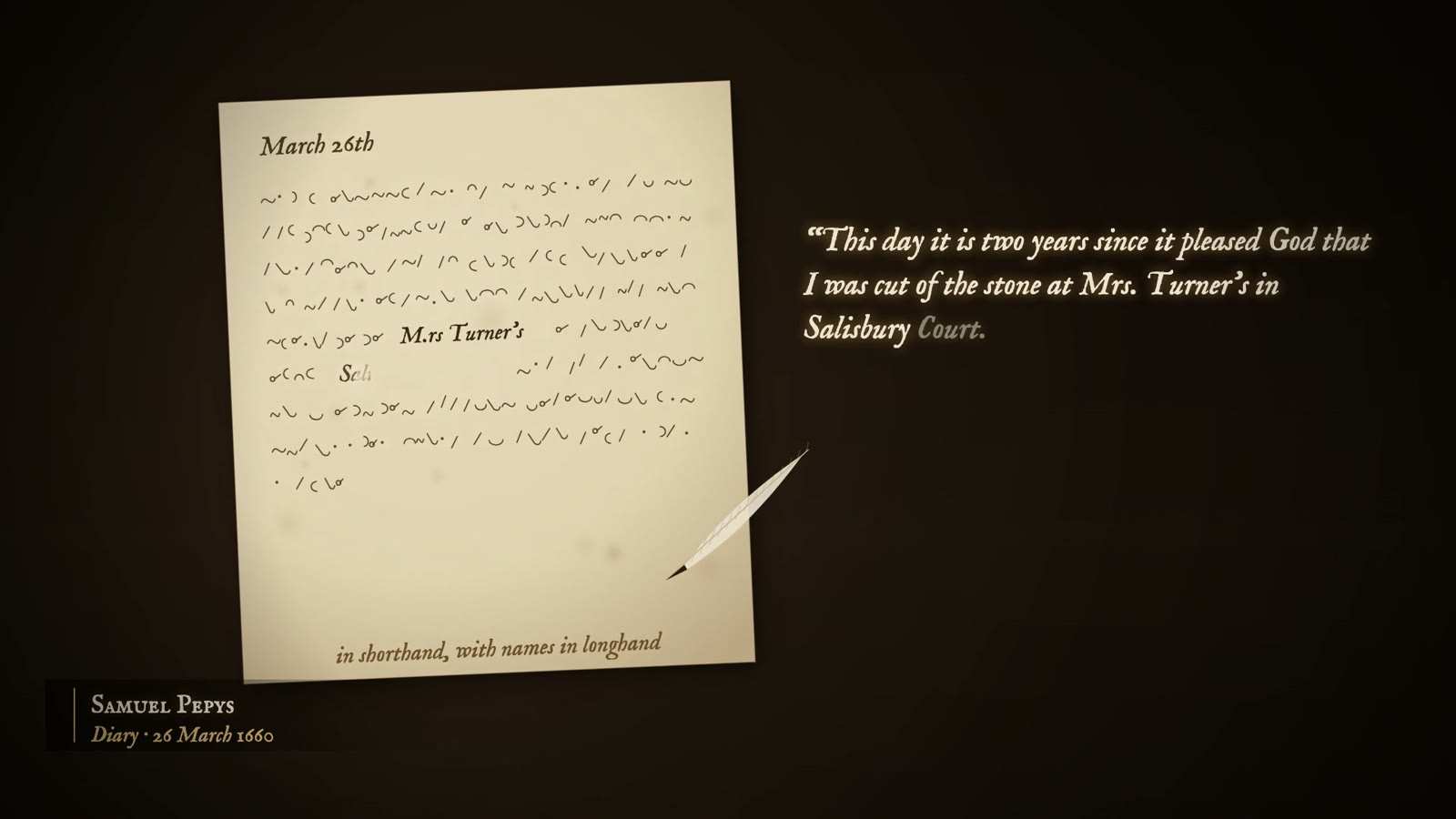
“This day it is two years since it pleased God that I was cut of the stone at Mrs. Turner's in Salisbury Court. And did resolve while I live to keep it a festival.”
Written on board ship, two years after the operation. The film stops at "festival"; the entry goes on to say he kept it the previous year at his house and would always have Mrs Turner and her company with him.
“Reflecting yesterday on your Desire to have a flexible Catheter, a Thought struck into my Mind how one might possibly be made.”
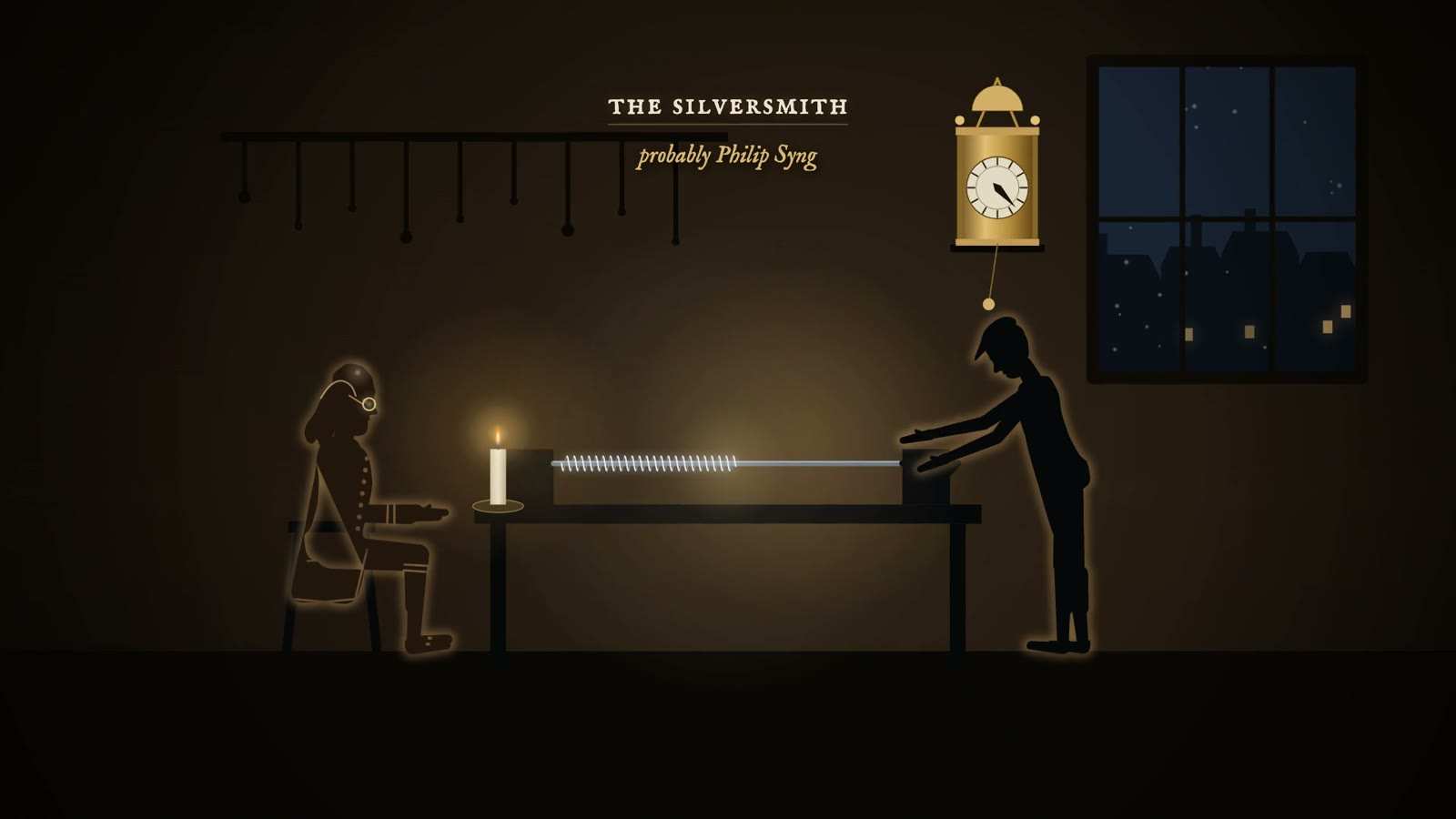
The film ends at "made"; the sentence goes on to say he went to the silversmith's and sat by until the catheter was finished, so that it might be ready for this post.
What the film says, and the evidence
Verified claims are shown plain. probable means one reliable source; disputed means the sources disagree, and both versions are shown. Unverified material is not published here.
-
Endemic bladder stone of childhood, a disease of poor, cereal-fed populations, occurred in parts of Europe, Norfolk among them, in the nineteenth century; a diet built on a single cereal is the probable link. probable
SourcesThe paediatric chapter ties endemic childhood stone to poor, cereal-fed populations, the weaning period and a single-cereal diet, and likens the disease in nineteenth-century Europe, including the Norfolk stone district, to that in twentieth-century Asia. Batty Shaw found the Norwich evidence compatible with a dietary cause in infancy or early childhood. The mechanism is a hypothesis. "Bread and gruel" is the film's image for that diet; neither source uses it.
-
Between 1772 and 1909 about 1,500 bladder stone cases were treated by operation at the Norfolk and Norwich Hospital. probable
SourcesBatty Shaw counts 1,498 cases: 1,161 lithotomies and 280 lithotrities, which sum to 1,441, not 1,498. The source counts cases, not patients; the film says patients (see conflicts).
-
The stones from all these operations survive, together with the operation registers, which give the patients' ages. probable
Sources- Batty Shaw 1979, East Anglian bladder stone (J R Soc Med 72) Secondary
- BAUS Virtual Museum: Norfolk and Norwich Hospital Museum or society
Batty Shaw used the registers for the age pattern of the disease: high incidence in boys under ten, a second peak at sixty to seventy, and low incidence in females. Contemporaries praised the register: Marcet in 1817, Civiale in 1838 and Henry Thompson in 1863 (as reported on the BAUS page). The film's "labelled, with the patient's name" is not stated in either source (see gaps).
-
Endemic bladder stone had disappeared from Norfolk by about 1909, and those who studied it at the time could not explain its cause.
Sources- Batty Shaw 1979, East Anglian bladder stone (J R Soc Med 72) Secondary
- BAUS Virtual Museum: Norfolk and Norwich Hospital Museum or society
Batty Shaw gives the disappearance of the disease as the reason the collection stops in 1909 (single source, probable). He shows a sharp fall from 1871-80 onwards and finds the evidence compatible with a dietary cause in infancy or early childhood. Hard water is not supported (see myths).
-
In the Colot family, technique for the stone was handed down as a secret: Laurent Colot inherited secret techniques from his father and was the first of several generations of Paris lithotomists. probable
SourcesRiches says the Colots were famous lithotomists in France for eight generations. The film's general statement, that a good method could feed a family for generations, is not stated in a source (see gaps). François Colot's treatise on the operation appeared only after his death, in 1727 (historyofmedicine.com, probable).
-
In France the Colot family were stone-cutters for some eight generations. probable
SourcesRiches says the Colots took up the Marian operation and were known as lithotomists for eight generations. Laurent Colot (1520-1590) was lithotomist at the Hôtel-Dieu and was named Operator of Stones to Henri II in 1556; François Colot (1630-1706) was the last of the line.
-
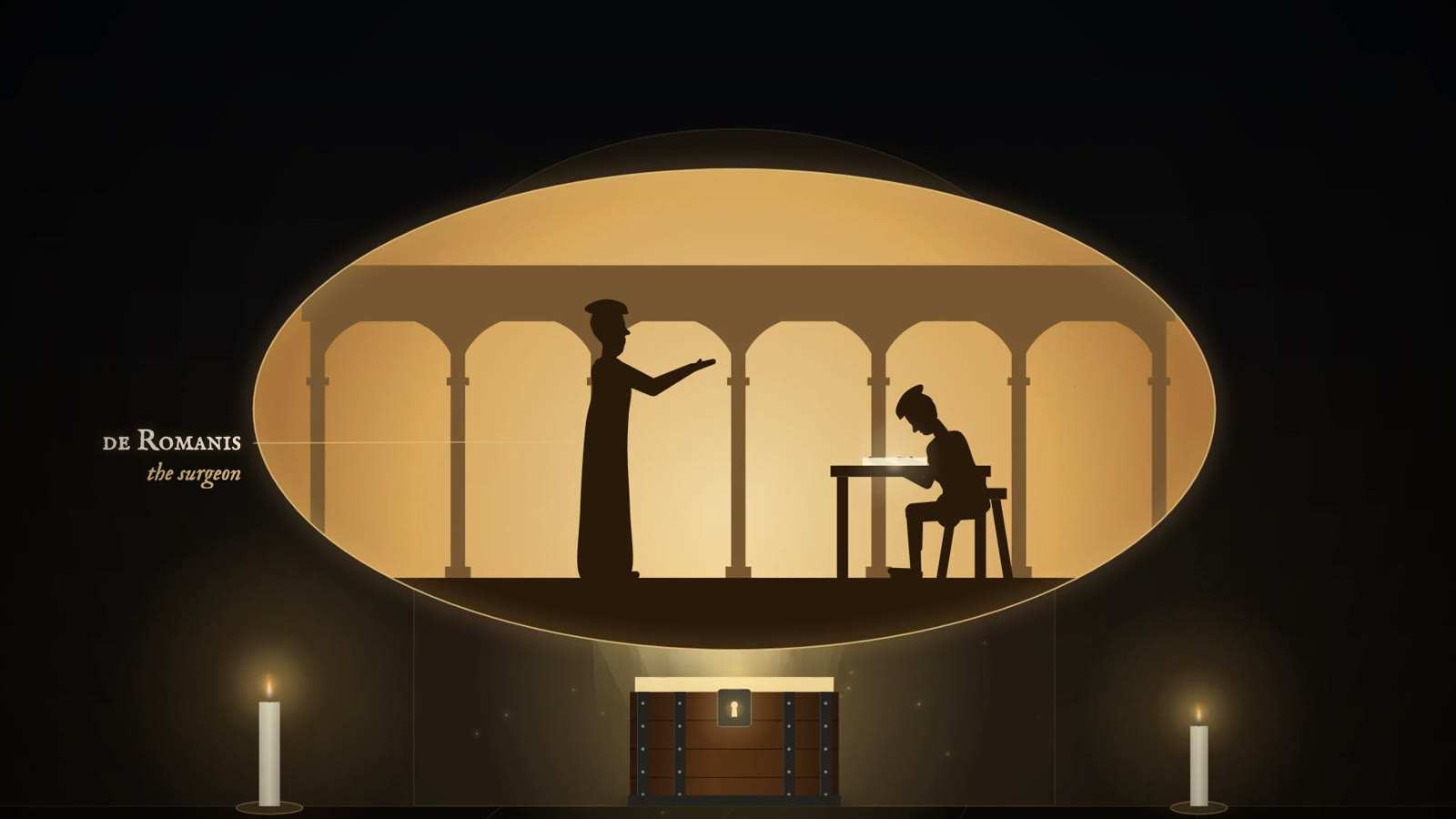
Around 1520 the Italian surgeon de Romanis devised a new method of cutting for the stone, which his pupil Mariano Santo described.
SourcesHis first name is disputed and the film gives none (see debates). Riches dates the first publication to 1522; Santo's dedicated treatise, the Libellus aureus, appeared in Venice in 1535.
-
The method used a grooved staff, passed along the urethra, to guide the instruments that followed into the bladder. probable
The grooved staff rests on Riches alone, who does not say what it was made of. The EAU History Office page gives the reasoning behind the method: stones pass fairly easily through the short, dilatable female urethra, so a male urethra made shorter and dilated might pass them too (probable).
-
It used many instruments and was called the greater apparatus (apparatus major), in contrast to the lesser apparatus (apparatus minor) of Celsus.
SourcesIn the lesser apparatus the surgeon cut onto a stone pressed down by fingers in the rectum.
-
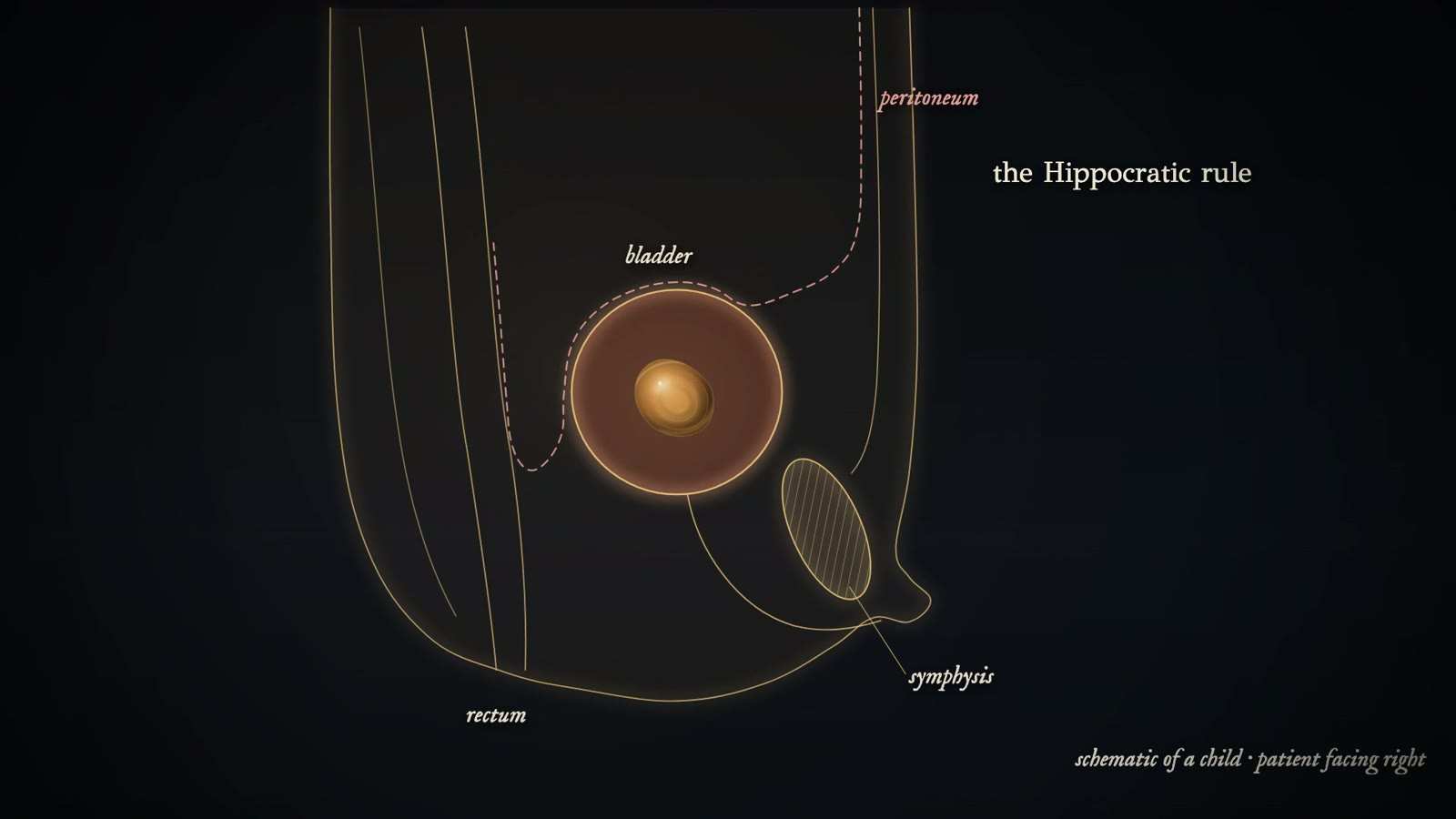
In the middle of the sixteenth century Pierre Franco, a barber-surgeon in Berne and Lausanne, removed a bladder stone the size of a hen's egg from a child through an incision above the pubis, after he had failed to extract it through the perineum.
Sources- EAU History Office: Suprapubic lithotomy Museum or society
- BAUS Virtual Museum: High approach Museum or society
- Riches 1967, The history of lithotomy and lithotrity (Arnott Demonstration, RCS) Secondary
- Embryo Project Encyclopedia: Pierre Franco (1505-1578) Secondary
The year is disputed, 1556 (EAU, Goddard, Embryo Project) or 1561 (Riches, BAUS); the film's "middle of the sixteenth century" covers both. The child's age is a separate, disputed claim.
-
The child was two years old. disputed
- Version 1
A child of two (EAU History Office, BAUS, Goddard, Riches, French Wikipedia).
Sources- EAU History Office: Suprapubic lithotomy Museum or society
- BAUS Virtual Museum: High approach Museum or society
- Riches 1967, The history of lithotomy and lithotrity (Arnott Demonstration, RCS) Secondary
- J. C. Goddard, Urology News history series (the high operation; lithotomy; lithotrity) Secondary
- French Wikipedia, Pierre Franco Secondary
- Version 2
A child of ten (one bookseller's description, an outlier).
Sources- Sokol Books, bookseller's description of Franco's work Secondary
Five of the six sources recorded in the dossier give two years; the dossier advises two.
- Version 1
-
Franco agreed to cut above the pubis at the urging of the child's parents.
Sources- Riches 1967, The history of lithotomy and lithotrity (Arnott Demonstration, RCS) Secondary
- J. C. Goddard, Urology News history series (the high operation; lithotomy; lithotrity) Secondary
Riches (as paraphrased in the dossier): at the importunity of the parents. Goddard: the parents begged him to do something.
-
Cutting into the bladder from above went against the Hippocratic rule that all abdominal wounds of the bladder were fatal. probable
Sources- BAUS Virtual Museum: High approach Museum or society
Single source: BAUS cites the rule in its account of Franco. How long the belief held is not stated in a source.
-
The child lived. Franco put the result down to luck and did not recommend the method to his colleagues.
Sources- EAU History Office: Suprapubic lithotomy Museum or society
- Riches 1967, The history of lithotomy and lithotrity (Arnott Demonstration, RCS) Secondary
- French Wikipedia, Pierre Franco Secondary
Verified as to substance: EAU (he thought the result accidental and did not recommend the method), French Wikipedia (luck) and Riches (he did not advise anyone to do the like). Franco's own wording could not be checked against his text, so neither the film nor this site quotes him, and the film's "wrote that" is not confirmed.
-
Later work on the high operation: Rousset of Montpellier described it and practised it on the cadaver, and in London John Douglas devised a "new operation" in 1719, published in 1723. probable
Sources- BAUS Virtual Museum: High approach Museum or society
BAUS spells the name Rosset and dates his work to 1590. The film's "almost forgotten for a hundred and sixty years" is a span reckoned from Franco to Douglas; no source in the kit states it (see gaps). Cheselden published his own treatise on the high operation in 1723 and then turned to the lateral operation (BAUS); his 1741 text dates James Douglas's Royal Society paper on the anatomy to 1717-18.
-
In 1697 Frère Jacques (Jacques Beaulieu) came to Paris with a reputation for a new operation for the stone.
SourcesCheselden (1741): he came to Paris in 1697 "full of reputation for the success of his new operation for the stone". The EAU biography and Ganem and Carson give his full name and his birth in Burgundy in 1651. That he designed the habit and gave himself the name is not stated in a graded source (see gaps).
-
He was not a true friar, but became a monk-like figure at about the age of forty. probable
Sources- EAU History Office: Jacques de Beaulieu Museum or society
Single source (EAU History Office biography).
-
He cut at the side of the perineum and entered the neck of the bladder from the side.
Sources- EAU History Office: Jacques de Beaulieu Museum or society
- BAUS Virtual Museum: Jacques de Beaulieu Museum or society dead link
- Ganem and Carson 1999, Frère Jacques Beaulieu: from rogue lithotomist to nursery rhyme character (J Urol 161) Secondary
The incision lay to the left of the raphe. His early method used no grooved staff.
-
In his Paris hospital series about twenty-five of some sixty patients died, though the figures vary between sources. disputed
- Version 1
Sixty cut, twenty-five died, thirteen cured and twenty-two left in hospital crippled: about 42 per cent mortality (BAUS, EAU, Goddard; probably one line of transmission).
Sources- BAUS Virtual Museum: Jacques de Beaulieu Museum or society dead link
- EAU History Office: Jacques de Beaulieu Museum or society
- J. C. Goddard, Urology News history series (the high operation; lithotomy; lithotrity) Secondary
- Version 2
Seventy-one operated on at the Hôtel-Dieu and La Charité in one month, with 53.5 per cent mortality (Ganem and Carson 1999).
Cheselden (1741) reckoned that the old method in Paris lost near two patients in five, from above 800 cases. Ganem and Carson also say he often performed a lithotomy in less than a minute.
- Version 1
-
Witnesses said there was no part of the region that he had not cut at one time or another.
Cheselden 1741 reports the remark from those who saw him operate; it refers to his early, unguided cutting.
-
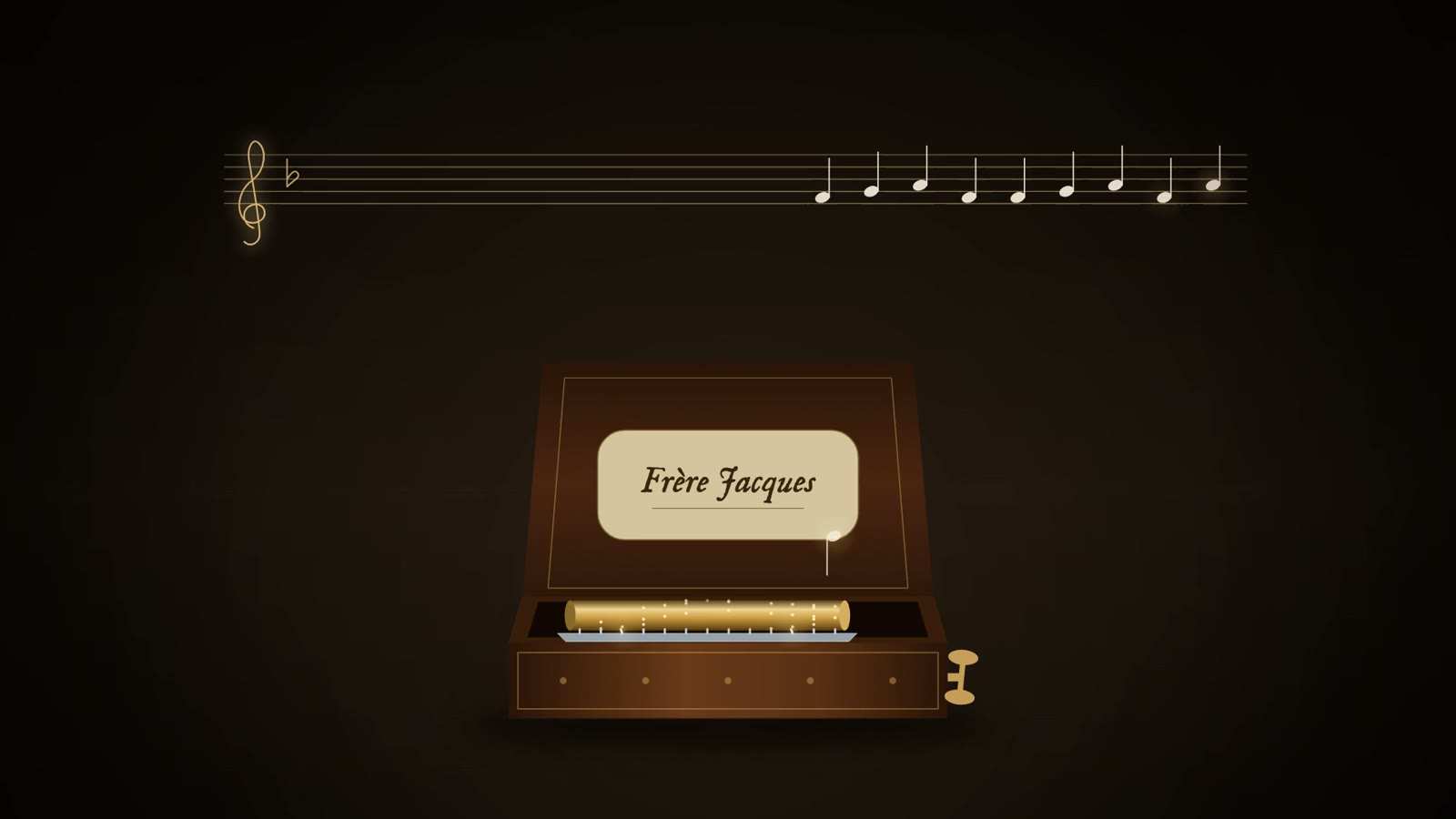
Historians who looked for a link between Beaulieu and the nursery round "Frère Jacques" found none. probable
SourcesOne secondary source: Ganem and Carson (1999), who found no direct association between Beaulieu and the song.
-
The melody first appears decades after Beaulieu's death, under another name. disputed
- Version 1
Its earliest known source is a French manuscript of about 1780, where the tune is called "Frère Blaise"; it was first printed in 1811.
Sources- Wikipedia, Frère Jacques (citing AllMusic and James Fuld) Secondary
- Version 2
Ganem and Carson describe the tune as a harpsichord piece of the 17th century by an unknown author, which would place it before Beaulieu died.
The second version was found when the cited paper was read for the site audit (AUDIT.md); the research dossier records only the first. The film follows the first.
- Version 1
-
Beaulieu later received instruction in anatomy and adopted a grooved staff.
Sources- EAU History Office: Jacques de Beaulieu Museum or society
- BAUS Virtual Museum: Jacques de Beaulieu Museum or society dead link
- Ganem and Carson 1999, Frère Jacques Beaulieu: from rogue lithotomist to nursery rhyme character (J Urol 161) Secondary
The anatomical instruction was arranged by the royal physician Fagon, with study under Duverney. He claimed some 5,000 operations in his career (his own claim, via Riches).
-
Later, at Versailles, he cut 38 successive patients without a death. probable
Sources- BAUS Virtual Museum: Lateral method Museum or society dead link
Single source. The film's "far better" later results rest on this report.
-
Rau of Amsterdam, who had seen Beaulieu operate, professed to do his operation with the improvement of a grooved staff; Cheselden credits Rau, later professor of anatomy at Leiden, with great success.
Cheselden writes that Rau's success made him decide to try the operation himself.
-
Rau is said to have hidden the key step of his method by keeping his thumb in the wound. probable
The film's "is said to" matches the single-source grade.
-
In London William Cheselden, surgeon at St Thomas's Hospital, developed and practised the lateral operation.
SourcesBAUS gives 1727 for his first lateral operation; Tröhler (James Lind Library) says he developed it gradually from August 1725 (see debates). His own 1741 text gives his St Thomas's series.
-
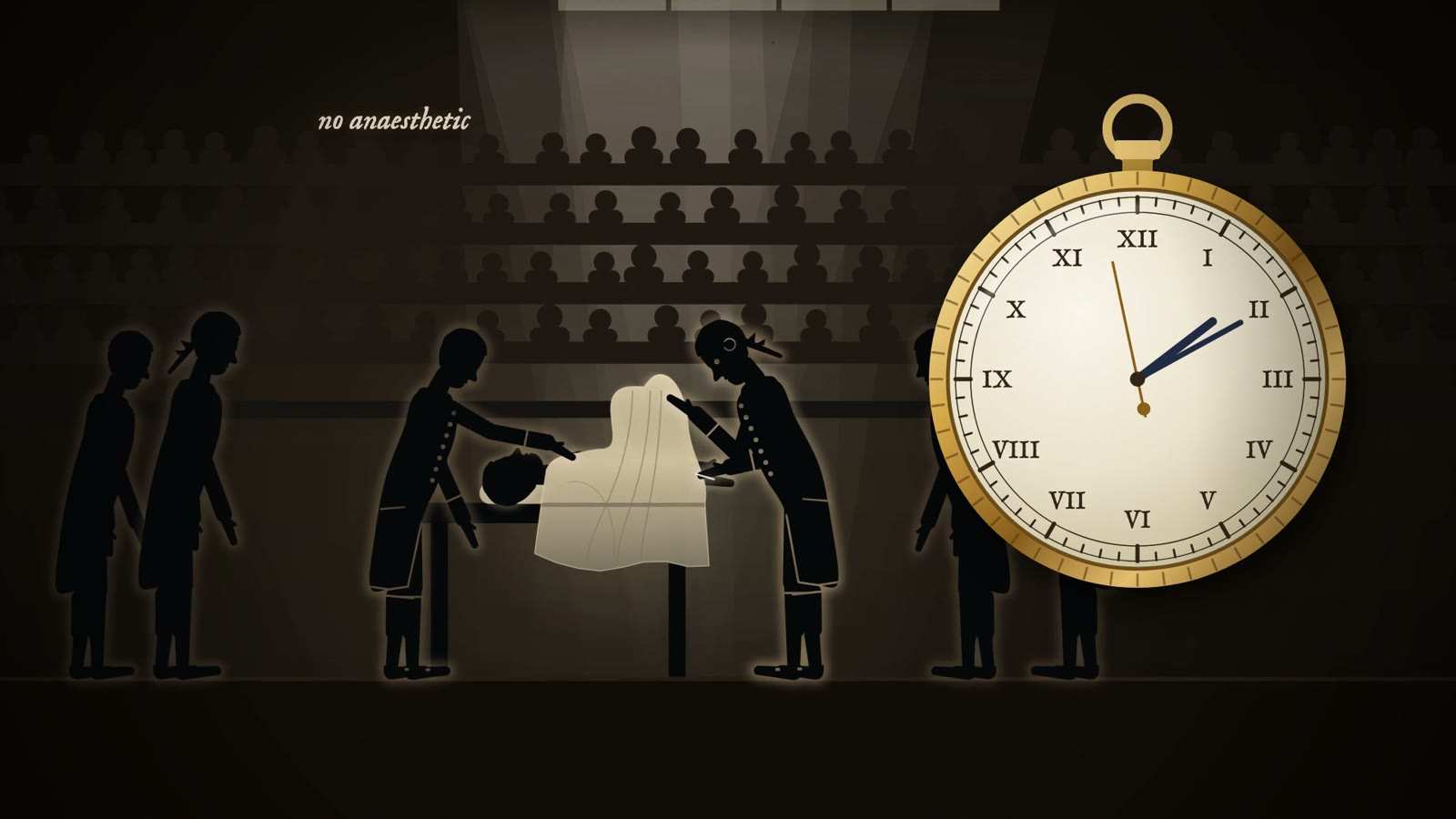
An eyewitness, the author of Cheselden's éloge, who saw many of his operations, reported one that took fifty-four seconds.
Sources- Chalmers' Biographical Dictionary: William Cheselden Secondary
- Riches 1967, The history of lithotomy and lithotrity (Arnott Demonstration, RCS) Secondary
- J. C. Goddard, Urology News history series (the high operation; lithotomy; lithotrity) Secondary
Chalmers cites the author of the éloge in the Mémoires de l'Académie Royale de Chirurgie. It is an eyewitness report, not Cheselden's own claim. Riches says his operations rarely took more than a minute and gives 54 seconds as his record. The film's "speed was mercy" is its own comment.
-
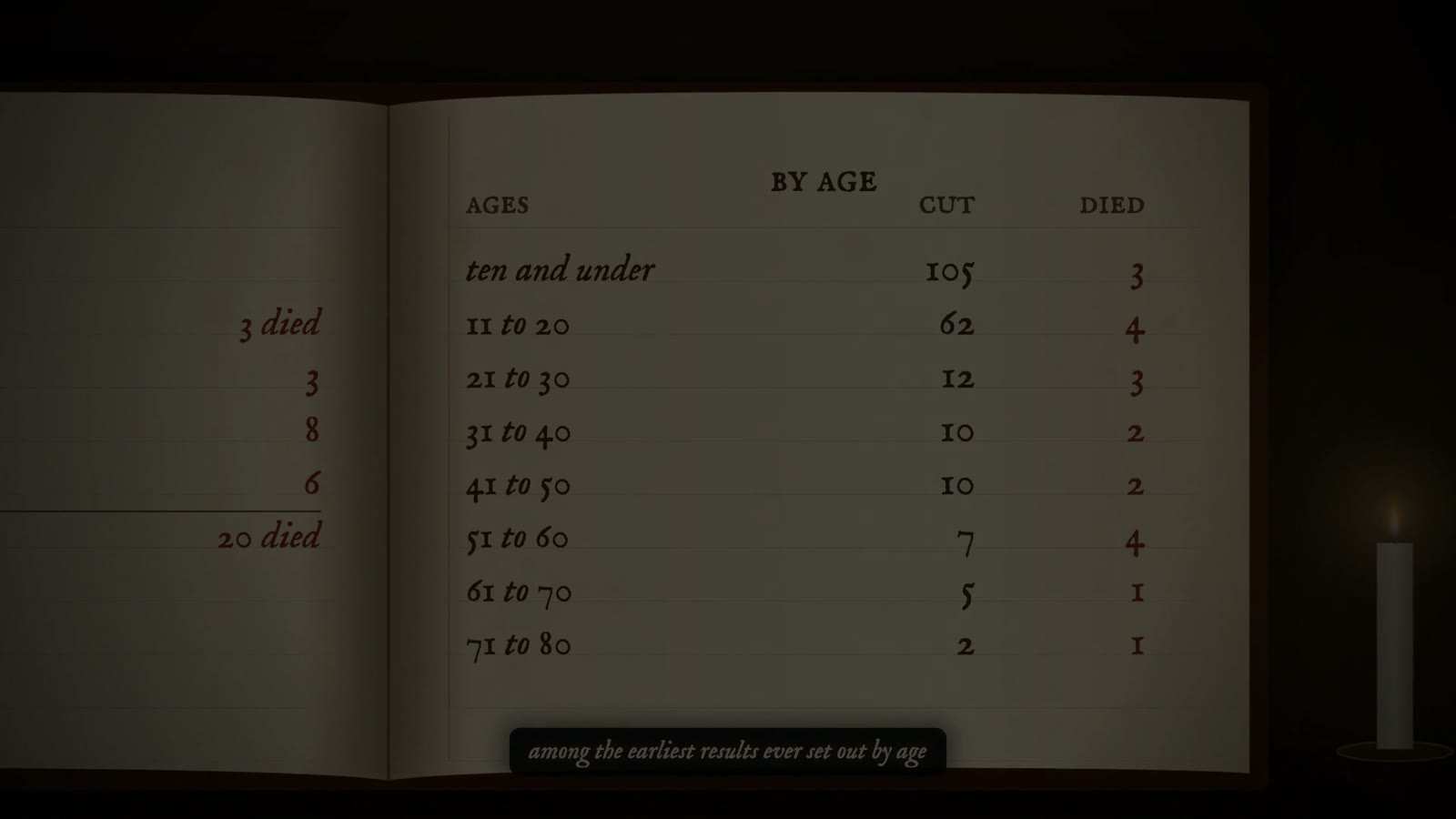
Cheselden published his St Thomas's results: 213 patients cut, 20 deaths.
SourcesBy fifties: 3 deaths in the first 50, 3 in the second, 8 in the third and 6 in the last 63, about 9.4 per cent overall. The table also appears in the 1740 fifth edition. He put the worse later results down to the oldest and most desperate cases coming to him.
-
He set the results out by age: of 105 patients aged ten or under, three died.
SourcesThe full age table (James Lind Library) runs from ten and under (105 cut, 3 died) to 71-80 (2 cut, 1 died). Cheselden wrote that the ages of those who lived and died were what most needed to be known.
-
By his reckoning the old method in Paris was losing nearly two patients in five.
Cheselden bases this on a calculation from above 800 Paris patients.
-
Samuel Pepys was cut for the stone on 26 March 1658 at his cousin's house in London, survived, and kept the anniversary as a feast.
Sources- Pepys, Diary, 26 March 1660 (Wheatley edition) Primary
- Pepys, Diary, 26 March 1661 (Wheatley edition) Primary
- Pepys, Diary, 26 March 1665 (Wheatley edition) Primary
- Worshipful Company of Barbers: Thomas Hollier Museum or society
- Wikipedia, Samuel Pepys (including its footnote on the autopsy) Secondary
The surgeon was Thomas Hollier; the house was that of his cousin Jane Turner in Salisbury Court. Recovery took about 35 days (Barbers' Company, probable). The 1660 entry, written on board ship, records that he had kept the day the year before at his house; the entries for 1661 and 1665 also mark the anniversary. Which room he was cut in is disputed, so the film says only "house".
-
He had a case made for the stone; it cost 24 shillings, which he thought a great deal of money, but it was well made and pleased him.
Diary entry for 27 August 1664.
-
After his death seven stones were found in his left kidney.
Sources- Matthews 1970, Pepys's pain (letter, New York Review of Books) Secondary
- Wikipedia, Samuel Pepys (including its footnote on the autopsy) Secondary
At autopsy the left kidney was ulcerated and held seven stones weighing about four and a half ounces; the bladder was gangrenous and the old wound had broken open. The year of his death is not verified in the kit.
-
In 1752 Benjamin Franklin's brother John was suffering from bladder stone, and Franklin wrote to him about a flexible catheter.
Letter of 8 December 1752 from Philadelphia to John in Boston; the autograph is at the New York Academy of Medicine.
-
Franklin went at once to a silversmith and sat by while the catheter was made, so that it would be ready for the post.
The Franklin Papers editors suggest the silversmith was probably Philip Syng (probable).
-
Franklin described a flexible tube made at a silversmith's by winding it on a wire into 'a kind of Scrue', which he expected would 'readily comply with the Turns of the Passage'.
The letter names the method, not the metal; silver is inferred from the silversmith.
-
Franklin did not invent the flexible catheter: catheters of the type were in common use abroad, and Francesco Roncalli-Parolino had made one about 1720. probable
Single source: the Franklin Papers editors, who say the letter misleadingly suggests he invented the instrument, and that Roncalli-Parolino twisted a thin bar of silver into a spiral and covered it with fine silk. His nationality is not given in the kit's extract of the note; the film's "an Italian" is logged in gaps.
Myths corrected
-
Unsupported. Hard water caused the bladder stones of Norwich and Norfolk.
-
Half true: the sense is right, the quotation is unverified. Franco wrote, in so many words, "I do not counsel any man to do the like".
-
Overstated: the figures vary. Frère Jacques's Paris series is known exactly: 25 deaths in 60 patients (or, in another telling, 53.5 per cent of 71).
-
Unsupported. The nursery round "Frère Jacques" was written about the lithotomist Jacques Beaulieu.
-
Unsettled. Frère Jacques died in a single, known year.
-
False. Cheselden's lateral lithotomy carried a mortality of about 50 per cent in his hands.
-
False. Benjamin Franklin invented the flexible catheter.
-
Unsupported as a stated fact. Pepys's bladder stone was the size of a tennis ball.