Chapter V
What the Water Knew
London, Liverpool, Berlin, Philadelphia, 1674 to 1924
Watch this chapter 19:09 in the filmRuns 7 min 23 s
Summary
Chapter V moves from looking at urine to testing it. Thomas Willis recorded in the 1670s that diabetic urine is sweet; the 1685 English version of his work describes a nobleman who passed nearly a gallon and a half in a day, wonderfully sweet. In 1776 Matthew Dobson of Liverpool evaporated such urine to a granular white cake that smelled like brown sugar, found the serum sweetish, and concluded that the sugar was in the blood before it reached the kidney. Others had seen urine coagulate with heat; in 1827 Richard Bright, at Guy's Hospital, heated urine in a spoon over a candle and tied dropsy and coagulable urine to diseased kidneys at post-mortem, the triad later called Bright's disease. Stone chemistry began with Scheele's acid from a calculus, later named uric acid, and Wollaston's cystic oxide of 1810, now cystine. In 1828 Friedrich Wöhler made urea without a kidney; the film rejects the textbook claim that this ended vitalism. The chapter ends with the question Galen had asked, how the kidney makes urine: Bowman's secretion theory of 1842, Ludwig's filtration theory of 1843, Heidenhain's dye experiments, Cushny's 'modern view' of 1917, and the frog micropuncture of Wearn and Richards, first reported in 1921 and published in 1924, which gave direct evidence of a protein-free filtrate and of reabsorption in the tubules. Both sides proved half right: the tubules also secrete.
Watch, shot by shot
-
-
-
-
-
-
-
In their words
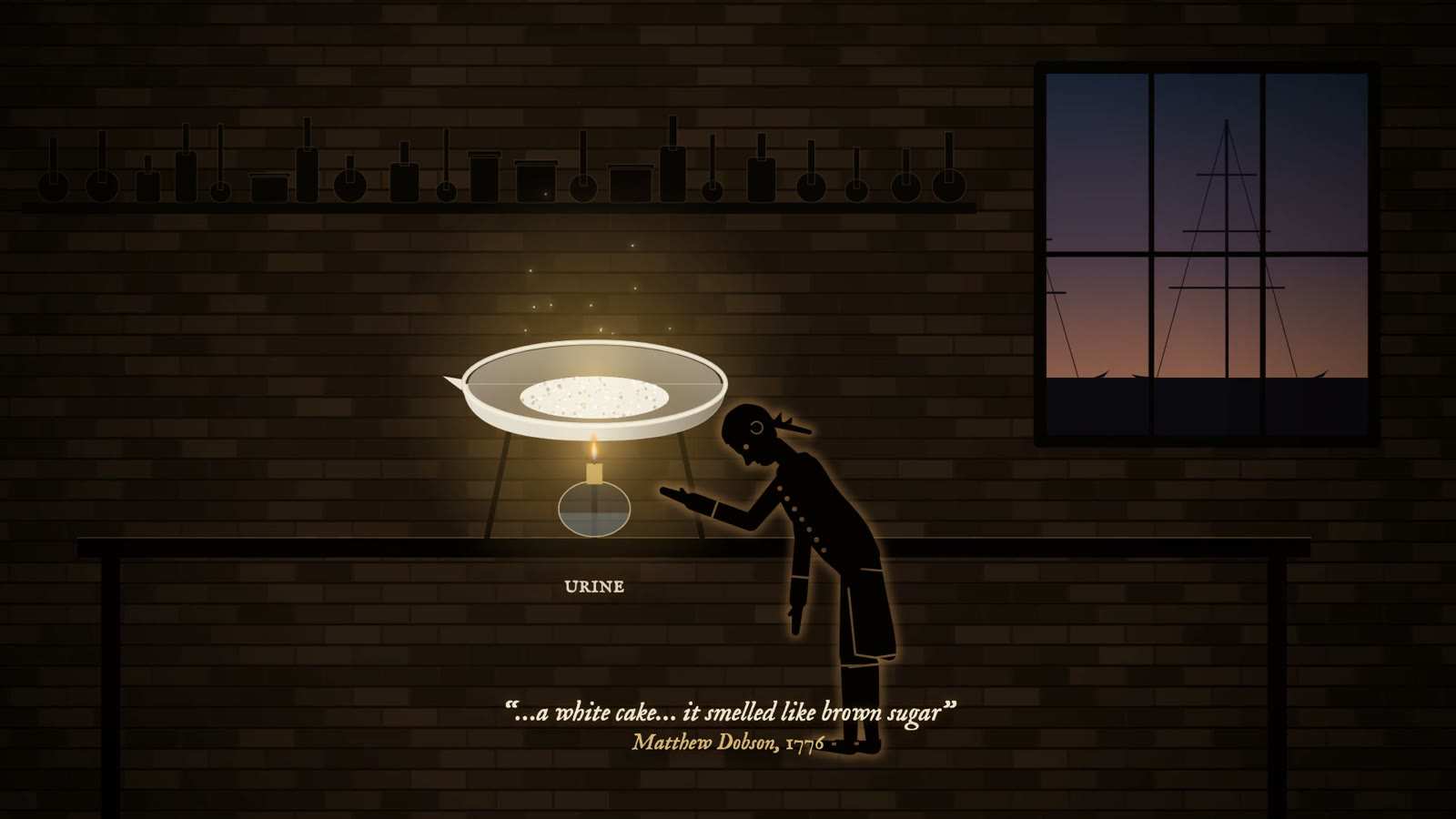
“Wonderfully sweet, as though Honey were mixt in it.”
The translator is not named in the sources read; the credits describe it as translated from his Latin. The full passage says the nobleman voided 'near a Gallon and a half of clear water, and wonderfully sweet, as though Honey were mixt in it'; the film begins at 'Wonderfully'. The popular English 'imbued with honey or sugar' has no located source edition.
“I have never yet examined the body of a patient dying with dropsy, attended with coagulable urine, in whom some obvious derangement was not discovered in the kidneys.”
The 1827 text has no comma after 'dropsy'; see conflicts.
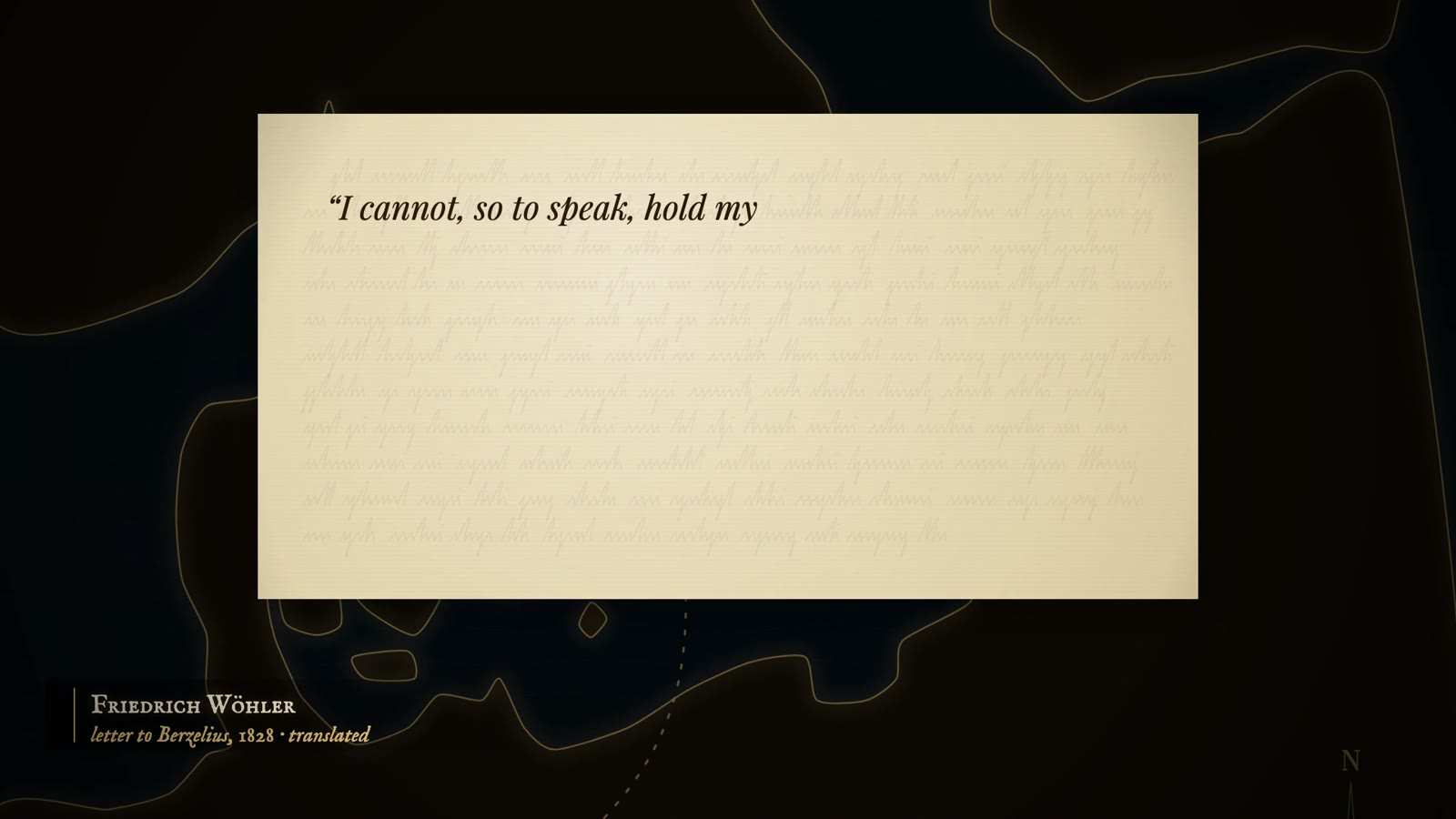
“I cannot, so to speak, hold my chemical water, and must tell you that I can make urea without needing kidneys, or indeed any animal at all, be it man or dog.”
The film's own translation of Wöhler's German. The German for 'cannot hold my chemical water' and 'make urea without needing kidneys or indeed any animal' was seen in the research; the German behind 'so to speak' and 'be it man or dog' was not checked (the English 'be it man or dog' appears in an English rendering). The exact date of the letter, often given as 22 February 1828, is unverified. Reading 'chemical water' as a deliberate pun on urine is an interpretation.
- Wikipedia: Wöhler synthesis Secondary
- Wikipedia: Friedrich Wöhler Secondary
- Wikipedia (German): Friedrich Wöhler Secondary
What the film says, and the evidence
Verified claims are shown plain. probable means one reliable source; disputed means the sources disagree, and both versions are shown. Unverified material is not published here.
-
Medieval readers of urine used odour and taste as well as colour: Isaac Israeli's Book of Urine lists odour, taste, colour and the condition of the liquid.
Sources- Utrecht University Special Collections: De urinis by Isaac Israeli Museum or society
- Posen Library: Isaac Israeli, Book of Urine Secondary
Isaac Israeli's Book of Urine treats odour and taste alongside colour, consistency and sediment.
-
In the 1670s Thomas Willis recorded that the urine in diabetes is sweet; the English version of his work tells of a nobleman who passed nearly a gallon and a half in a day.
SourcesPharmaceutice rationalis (Oxford, 1674) has a chapter on excessive urination and diabetes; the 1679 edition states that the urine in diabetes is wonderfully sweet; the nobleman's case is in the 1685 English, The London Practice of Physick. The 1674 Latin wording on sweetness is garbled in the scan read.
-
Matthew Dobson evaporated two quarts of a diabetic patient's urine to a white, granular cake that smelled like brown sugar; he published the experiment in 1776.
SourcesPublished in Medical Observations and Inquiries. Secondary sources date the patient's admission to 1772, one of them to the Liverpool Infirmary.
-
Dobson found the patient's serum sweetish, though less sweet than the urine, and concluded that the sugar already existed in the blood and was not made in the kidney.
SourcesHis words: the saccharine matter 'was not formed in the secretory organ, but previously existed in the serum of the blood'.
-
Before Bright, others had seen urine coagulate on heating.
Sources- Diamantis et al. 2008, J Urol 180:2330-2332 (text) Secondary
- Whonamedit: Domenico Cotugno Secondary dead link
Frederik Dekkers in the late 17th century (year disputed) and Domenico Cotugno in 1764, who found a dense white body like egg albumen in the heated urine of a soldier with dropsy.
-
Richard Bright, of Guy's Hospital in London, wrote in his Reports of Medical Cases (1827) that urine heated in a spoon over a candle becomes clouded before it reaches the boil.
SourcesHis place at Guy's is from the secondary source, which describes his wards there.
-
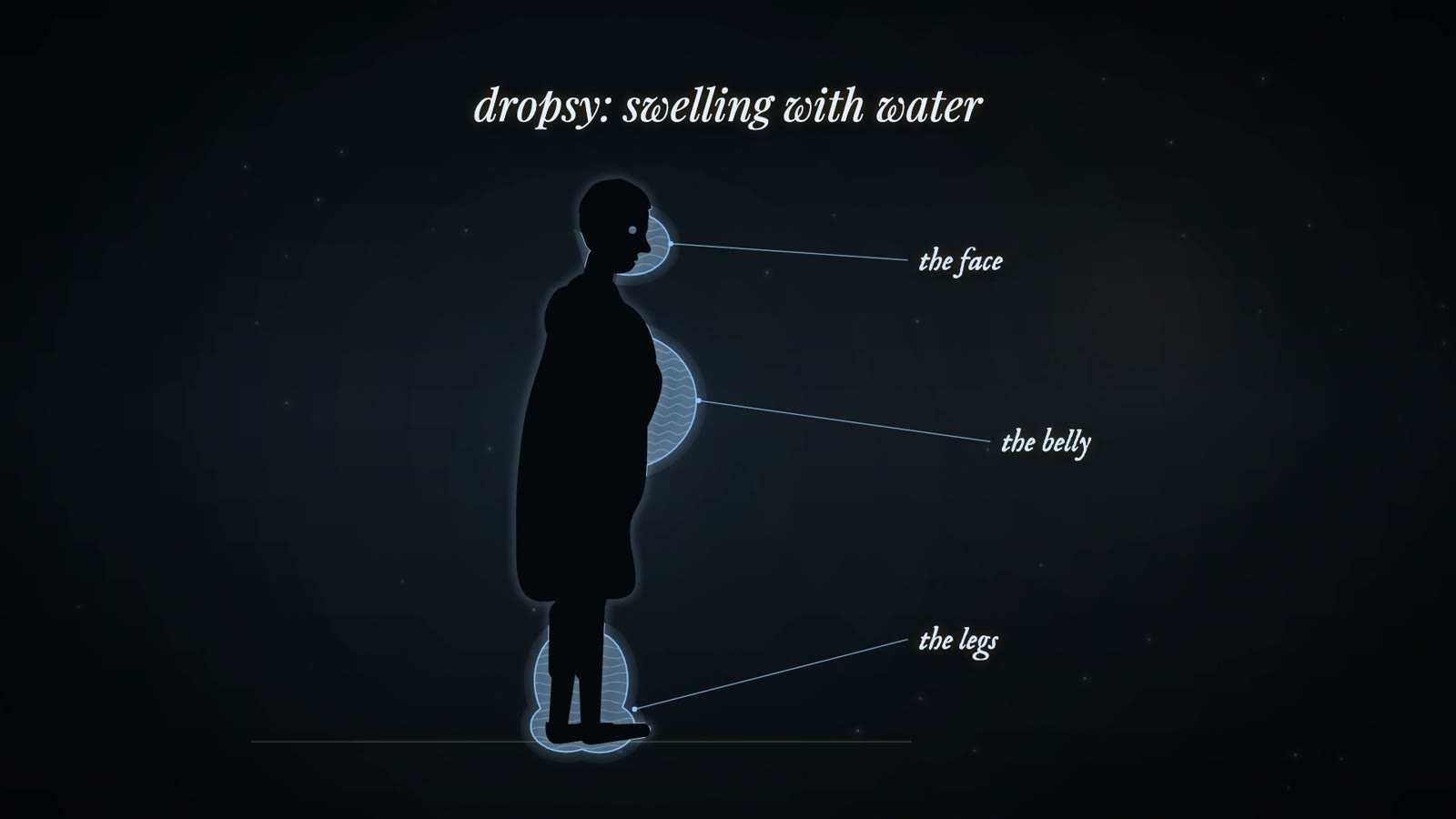
Bright followed his patients to the post-mortem table and tied dropsy with coagulable urine to visible disease of the kidneys.
SourcesHis Reports rest on 23 cases collected from 1825 to 1827 (one source).
-
Kidney disease with dropsy and protein in the urine came to be called Bright's disease. probable
Sources- Wikipedia: Bright's disease (listed in research/02 §11) Secondary
One source. The narration's 'for a century afterwards' is not in the sources read (see gaps).
-
A Hippocratic aphorism linked bubbles on the surface of the urine to disease of the kidneys.
SourcesAphorisms VII.34, in Adams's translation. The film reads the froth as protein, the sign Bright tied to the kidney; no source in the kit makes that reading (see GAPS.md).
-
In 1798 George Pearson wrote that Scheele's experiments had exploded the opinion that urinary calculi were earthy.
Who had held the earthy view, and for how long, is not stated in the source read (see gaps).
-
Scheele found a new acid in a urinary calculus, first called lithic acid and later uric acid; the film dates this to 1776. disputed
- Version 1
1776, the year given by Pearson (1798) and by the encyclopaedia article on uric acid.
Sources- Pearson 1798, Experiments and observations on urinary concretions (Phil Trans, OCR) Primary
- Wikipedia: Uric acid (listed in research/02 §11) Secondary
- Version 2
1775, the year of a publication on urinary calculi in the encyclopaedia article on Scheele.
Sources- Wikipedia: Carl Wilhelm Scheele (listed in research/02 §11) Secondary
The film uses 1776, as the research recommends. Pearson proposed 'uric' in place of 'lithic' in 1798, calling 'lithic' a solecism.
- Version 1
-
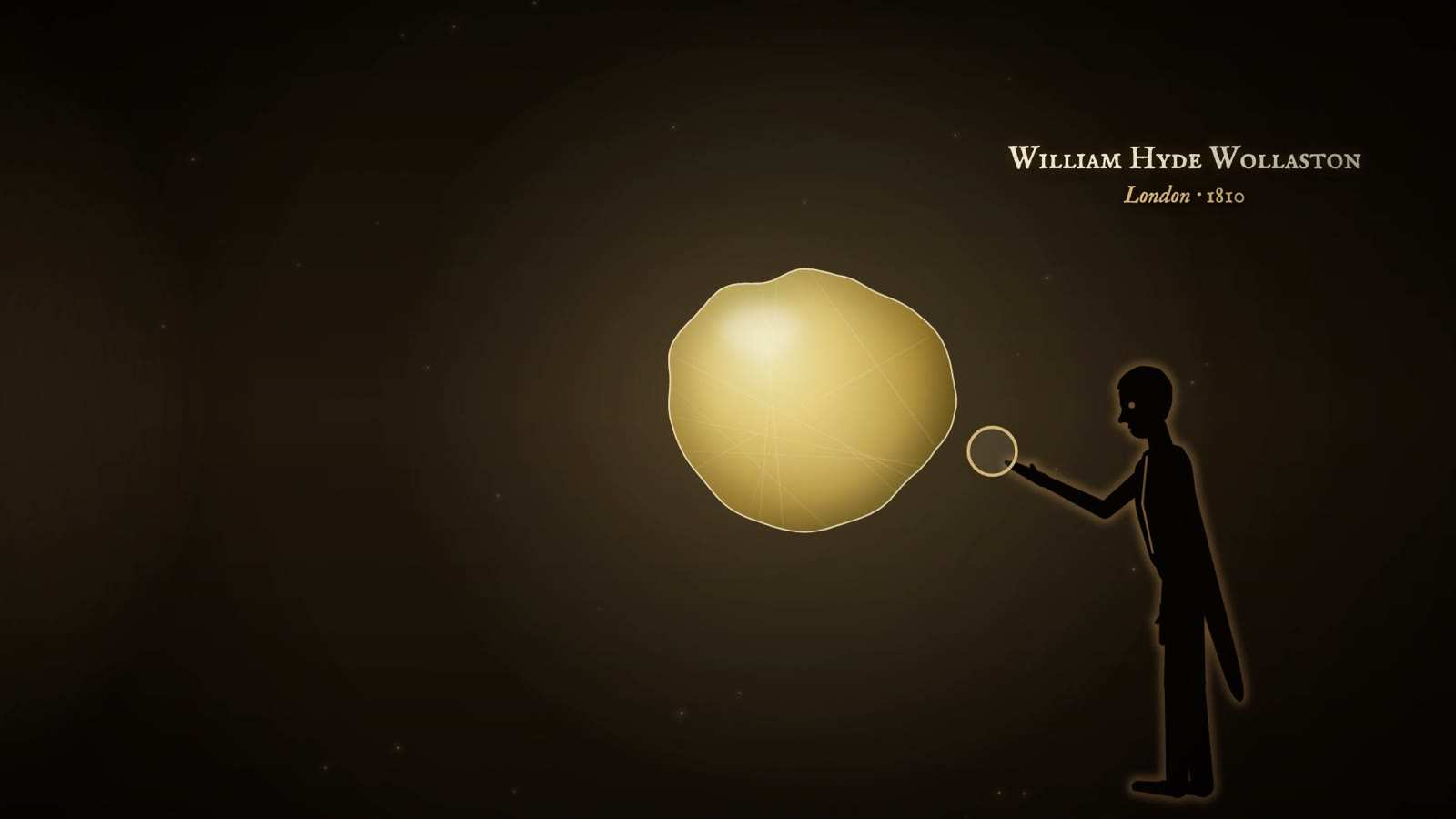
In 1810 William Hyde Wollaston described a new kind of urinary calculus. The first specimen had been removed from a child of five, the brother of Dr Reeve of Norwich, and because both known stones came from the bladder he called the substance cystic oxide.
SourcesThe yellowish semi-transparency and glistening lustre are his description of the second specimen, a 270-grain stone from a man of 36 in the Guy's Hospital collection.
-
Cystic oxide is cystine, among the first amino acids identified. probable
Sources- Wikipedia: Cystine Secondary
- EAU History Office: Diagnosis in the laboratory Museum or society
Berzelius renamed cystic oxide cystine in 1833 (Wikipedia). The EAU History Office calls cystine the first amino acid discovered; the film's 'one of the very first' is more cautious. Each statement rests on one source.
-
In 1828 Friedrich Wöhler made urea artificially, from cyanate with ammonia or ammonium salts, with no kidney or animal involved.
Sources- Wikipedia: Wöhler synthesis Secondary
- Wikipedia: Urea Secondary
Reported in Annalen der Physik und Chemie 88:253-256: ammonium cyanate rearranges to urea. The narration's 'in Berlin' and 'the chief solid of urine' are not in the sources read (see gaps).
-
Wöhler announced the result in a letter to Berzelius in 1828. probable
Sources- Wikipedia: Friedrich Wöhler Secondary
- Wikipedia (German): Friedrich Wöhler Secondary
Both sources are Wikipedia. English Wikipedia says Wöhler had worked under the direction of Berzelius in Stockholm; German Wikipedia dates the synthesis to 22 February 1828.
-
Historians dispute the textbook claim that this synthesis killed belief in a vital force; on one account vitalism began to lose support only after Kolbe's conversion of 1845. disputed
- Version 1
Textbook account: the 1828 synthesis overturned vitalism. A survey published in 2000, as cited by Wikipedia, found that about nine in ten chemistry textbooks repeat some version of it.
Sources- P. Ramberg, 2000 survey of chemistry textbooks on the 'Wöhler myth', as reported in Wikipedia: Wöhler synthesis Secondary
- Wikipedia: Wöhler synthesis Secondary
- Version 2
Historians' account: the link between the synthesis and the end of vitalism is disputed, and vitalism began to lose support only after Kolbe's conversion of 1845.
Sources- Wikipedia: Wöhler synthesis Secondary
Ramberg 2000 is cited here as Wikipedia reports it; the paper itself was not read for the site. The film takes the historians' view.
- Version 1
-
In 1842 William Bowman re-examined the Malpighian bodies of the kidney, the tufts of vessels Malpighi had described, and showed that each tuft sits in a capsule continuous with a tubule.
Sources- Bowman 1842, On the structure and use of the Malpighian bodies of the kidney (Phil Trans, OCR) Primary
- Wikipedia: Marcello Malpighi (listed in research/02 §11) Secondary
- Hektoen International: History of nephrology, the middle period Secondary
The paper was read on 17 February 1842. His age at the reading is given as 25 in one source and 26 in another. Malpighi's description is dated 1666 (one source).
-
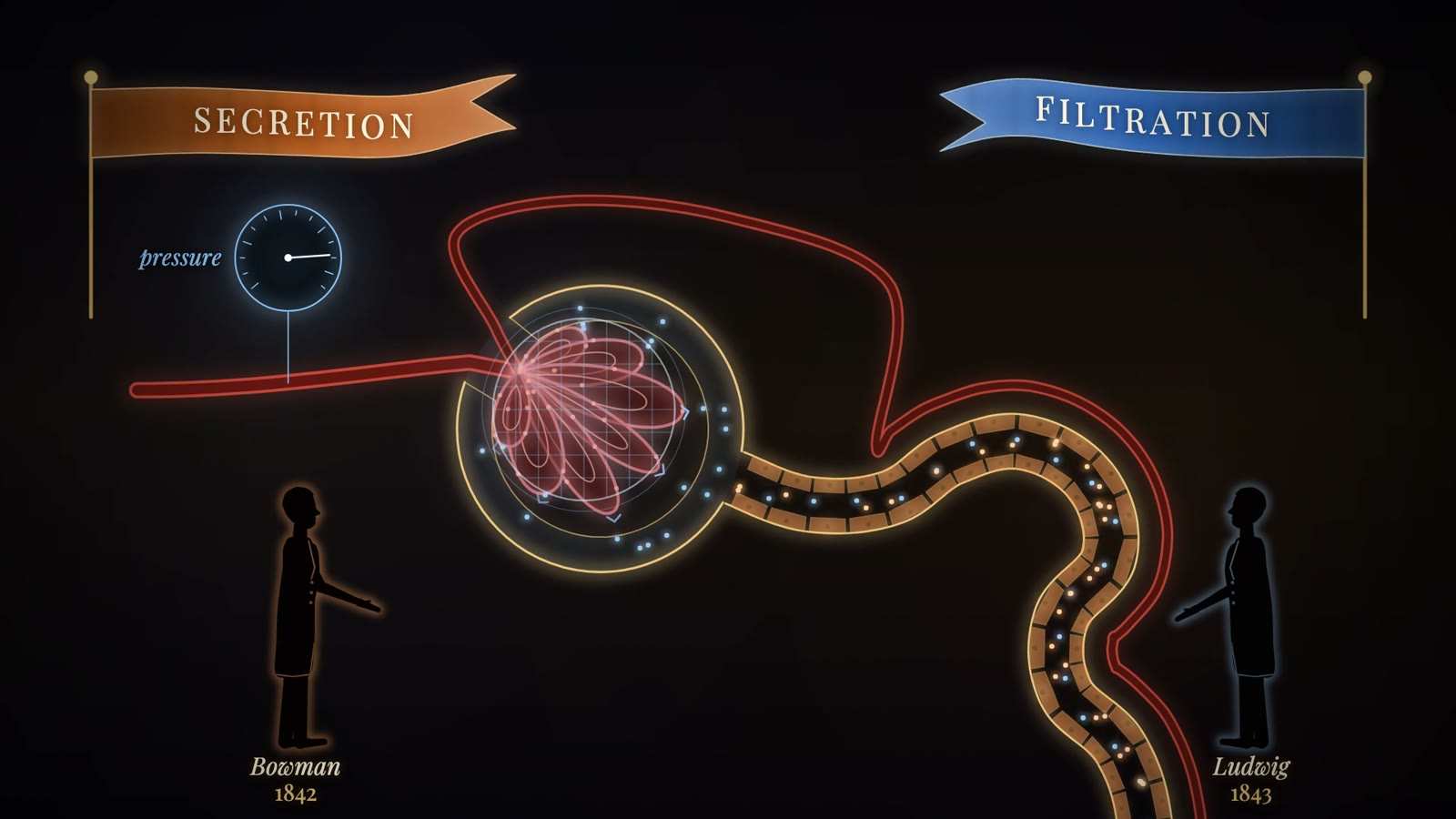
Bowman proposed that the glomerulus separates the watery part of the blood, and that the tubules and their capillaries secrete the substances that give urine its character, such as urea and uric acid.
SourcesHe accounted for the separation of water by an abrupt slowing of the blood where a large artery breaks up into a tuft with a single narrow exit.
-
Carl Ludwig proposed that the glomerulus is a filter driven by blood pressure, giving a protein-free fluid that the tubules concentrate. probable
Sources- Peña Rodríguez 2018, Acta Med Grupo Angeles 16(S1):S7-S15 (history of renal physiology) Secondary
- historyofmedicine.com (Garrison-Morton derived) entry on Carl Ludwig, Beiträge zur Lehre vom Mechanismus der Harnsecretion, Marburg, N. G. Elwert, 1843 Secondary
Physical filtration at the glomerulus is well supported as his view; the tubular step (concentration by reabsorption of water) rests on one summary. His account explained urine formation by physics and chemistry alone.
-
Ludwig's theory appeared the year after Bowman's paper, in 1843. disputed
- Version 1
1843: Beiträge zur Lehre vom Mechanismus der Harnsecretion, published at Marburg after lectures in 1842 to 1843.
Sources- historyofmedicine.com (Garrison-Morton derived) entry on Carl Ludwig, Beiträge zur Lehre vom Mechanismus der Harnsecretion, Marburg, N. G. Elwert, 1843 Secondary
- Peña Rodríguez 2018, Acta Med Grupo Angeles 16(S1):S7-S15 (history of renal physiology) Secondary
- Version 2
1844: a year often cited, for which the film's research found no source; it lists 1844 among common errors.
Sources- The year 1844 as recorded in the film's research: research/01_antiquity.md §6.3 uses it; research/02_uroscopy_and_urine.md §5.4 and §7 item 11 note it as often cited, possibly for a later handbook article Secondary
The film follows 1843, the year both sources read give. The suggestion that 1844 refers to a later handbook article is unverified (see gaps).
- Version 1
-
Experiments with dyes injected into animals seemed to favour secretion by the tubules. probable
Sources- Peña Rodríguez 2018, Acta Med Grupo Angeles 16(S1):S7-S15 (history of renal physiology) Secondary
- historyofmedicine.com (Garrison-Morton derived) entry on Rudolf Heidenhain, Versuche über den Vorgang der Harnabsonderung, 1874 Secondary
One review (Peña Rodríguez 2018) describes Rudolf Heidenhain (1874) injecting indigo carmine into rabbits with lowered blood pressure and finding the dye in the tubular cells and lumen; another source (Wikipedia, Bowman-Heidenhain hypothesis) names the dye as methylene blue.
-
The dispute between filtration and secretion lasted about eighty years. probable
Sources- Resolving an 80-yr-old controversy: the beginning of the modern era of renal physiology, Advances in Physiology Education, 2014 (title and journal only) Secondary
The figure comes from the title of a 2014 review, 'Resolving an 80-yr-old controversy: the beginning of the modern era of renal physiology' (title and journal only; text not read). It matches the interval from Bowman (1842) and Ludwig (1843) to Wearn and Richards (1921 preliminary report; 1924 full paper), but no source read states the span in words.
-
In 1917 Arthur Cushny published The Secretion of the Urine and called his theory 'the modern view'.
In the dedicatory letter to Starling he wrote that the theory took features from each of its precursors and appeared to conflict with no ascertained fact.
-
Cushny's theory combined glomerular filtration of plasma without its protein and reabsorption in the tubules; he denied tubular secretion. probable
SourcesFrom one public-domain source with partial OCR. He separated 'threshold' substances such as glucose from non-threshold substances such as urea and sulphate.
-
At the University of Pennsylvania in Philadelphia, Joseph Wearn and Alfred Newton Richards, working under a microscope in intense light, withdrew fluid directly from the glomerular space of the frog kidney. probable
Sources- Schmidt 1971, NAS Biographical Memoir of Alfred Newton Richards Secondary
- Wearn JT, Richards AN. Observations on the composition of glomerular urine, with particular reference to the problem of reabsorption in the renal tubules. Am J Physiol 1924;71(1):209-227. doi:10.1152/ajplegacy.1924.71.1.209 Primary
The idea was Wearn's, after the team watched Robert Chambers demonstrate micromanipulation in December 1920. The film's anaesthesia, fine glass pipette and single capsule come from dossier 02 §5.7, which cites the memoir; the memoir does not contain them, and the 1924 paper was not read (see CONFLICTS.md).
-
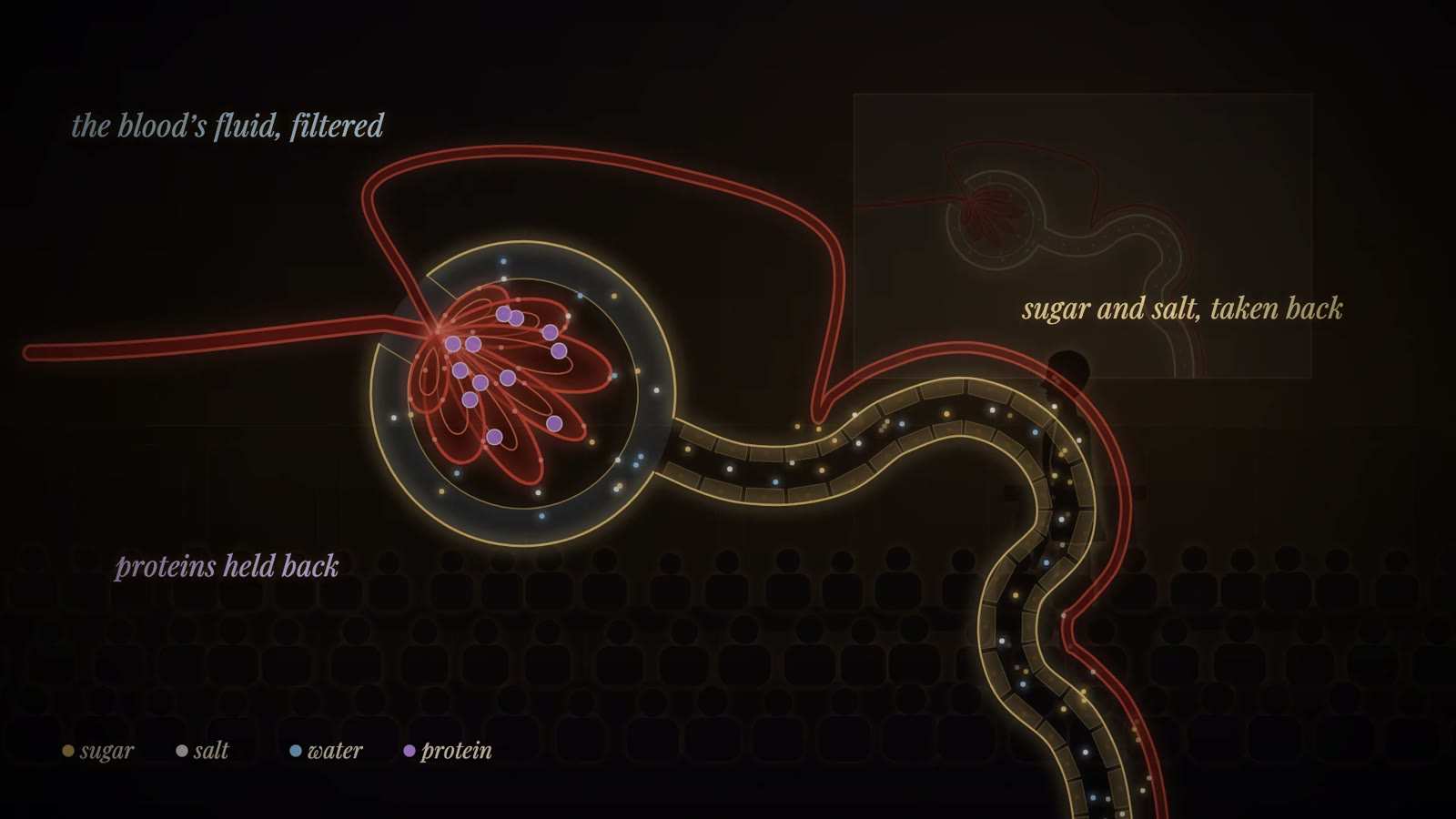
The glomerular fluid contained sugar and chloride; bladder urine taken at the same time contained neither; and no protein was found in the glomerular samples. probable
SourcesChloride by silver nitrate and sugar by Benedict's solution (from the memoir); protein by the acetic acid and potassium ferrocyanide test in eleven samples (from Dirks, Clapp and Berliner 1964, citing Wearn and Richards). The 1924 paper itself was not read.
-
The results pointed to the tubules taking back sugar and chloride, and suggested, without proving, that the capsule held a protein-free filtrate of plasma. probable
SourcesSchmidt's memoir calls the result the first direct evidence of tubular reabsorption, which suggests, though it does not prove, glomerular filtration; the absence of protein is from Dirks, Clapp and Berliner (1964). The research dossier states the filtrate as a finding, more firmly than the memoir it quotes (see conflicts).
-
At the preliminary report in December 1921 the finding was challenged on the ground that a frog's kidney need not behave like a mammal's; Richards's reply won an ovation. probable
SourcesThe meeting was of the American Physiological Society. One source (Schmidt's memoir).
-
Their colleague Carl Schmidt later wrote that the work gave the first direct evidence of tubular reabsorption and suggested, though it did not prove, glomerular filtration.
Sources -
Richards's micropuncture work moved to mammals only from 1941; later micropuncture studies found glomerular fluid to match the water phase of plasma for glucose, chloride, potassium, urea and pH. probable
Sources- Whonamedit: Alfred Newton Richards Secondary dead link
- Vallon 2008, Micropuncturing the nephron Secondary
Each half rests on one source (whonamedit; Vallon 2008), and the findings on plasma water were built up over many studies, not all from the 1920s. No source read says in words that the mammalian results agreed with the frog's (see gaps).
-
Homer Smith described the kidney as both a filter and a secretory organ: the tubules secrete as well. probable
Sources- Wikipedia: Homer W. Smith (listed in research/02 §11) Secondary
One source. Bowman had proposed tubular secretion in 1842 and Cushny denied it in 1917; Smith's description is the basis for the narration's remark that Bowman was not entirely wrong. That the combined account was built in the 1930s is the research dossier's summary, not a source statement.
-
Theophilus's definition of urine as the filtrate of the blood dates from the seventh century and the micropuncture evidence from the 1920s, about thirteen centuries apart. probable
Sources- Wallis 2000, Inventing diagnosis: Theophilus' De urinis in the classroom (Dynamis 20:31-73) Secondary
- Wearn JT, Richards AN. Observations on the composition of glomerular urine, with particular reference to the problem of reabsorption in the renal tubules. Am J Physiol 1924;71(1):209-227. doi:10.1152/ajplegacy.1924.71.1.209 Primary
The interval is arithmetic from the two dates. The definition is reported by one source (Wallis 2000); the 1924 paper is cited from its bibliographic record and was not read.
Myths corrected
-
Overstated. Theophilus invented the test for albumin in urine.
-
Misquotation. Willis wrote that diabetic urine was 'wonderfully sweet as if it were imbued with honey or sugar'.
-
Half true. Matthew Dobson showed sugar in diabetic urine in 1772.
-
Disputed; not found in Willis. Thomas Willis coined the term 'diabetes mellitus'.
-
Wrong date. Cotugno described protein in the urine in 1770.
-
False as usually told. Wöhler's synthesis of urea in 1828 killed the doctrine of vitalism.
-
Disputed; 1843 better supported. Carl Ludwig published his filtration theory in 1844.
-
Probably wrong dye. Heidenhain demonstrated tubular secretion with methylene blue.
-
Overstated. Wearn and Richards proved glomerular filtration beyond doubt in 1924.
-
Date uncertain. Dekkers described urine that coagulates with heat in 1695.