Chapter IX
The Gland That Stands Before
Venice, London, Chicago, Baltimore, 1536 to 2018
Watch this chapter 48:14 in the filmRuns 9 min 28 s
Summary
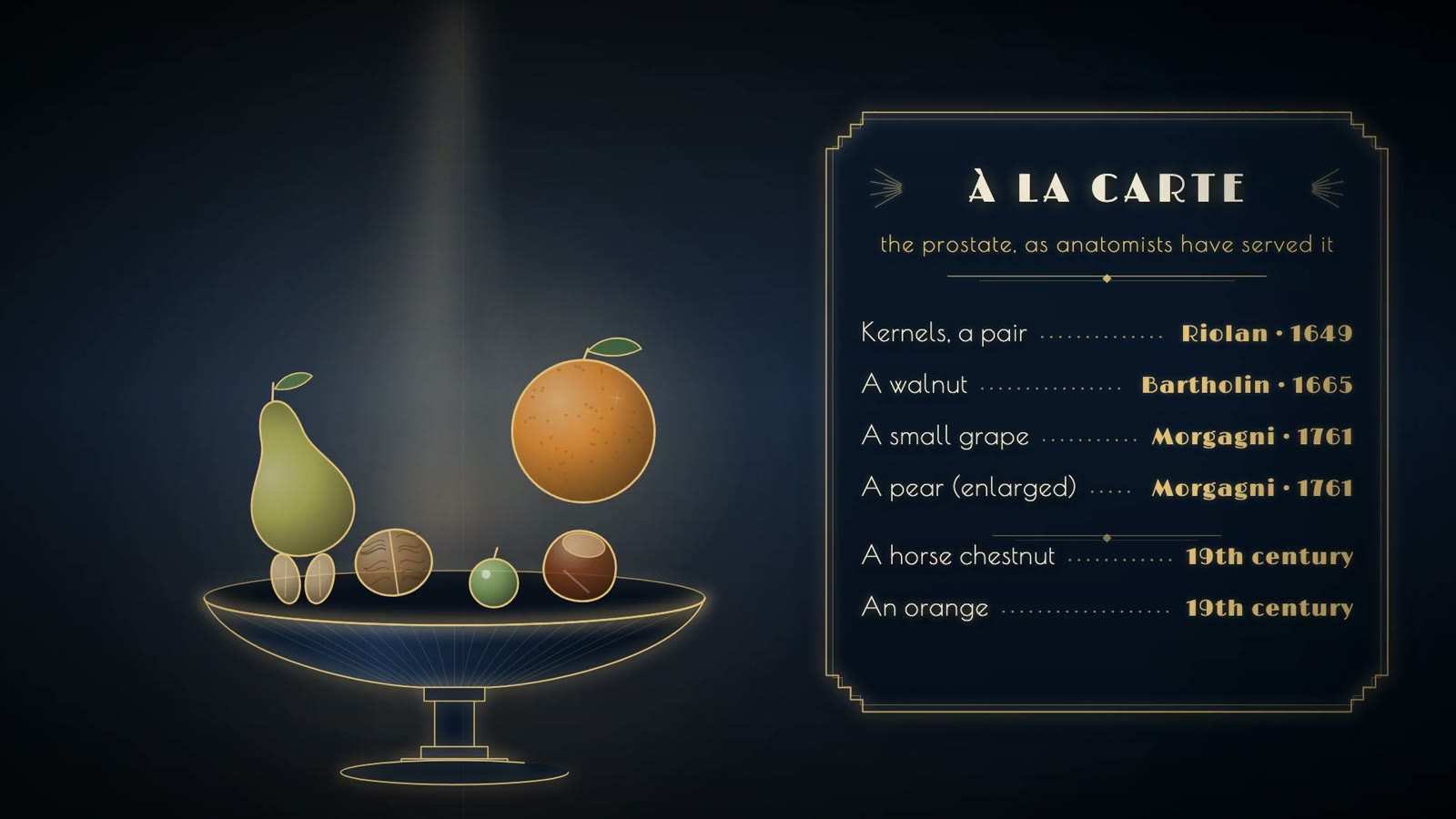
Chapter IX follows the prostate from its name to the screening debate. The word comes from the Greek for 'one who stands before'. The film declines the usual credit to Herophilus, noting that the Alexandrian anatomists seem to have used a different term, and dates the first plain description to Venice in 1536 (Niccolò Massa) and the first drawing to Vesalius in 1538. Anatomists likened the gland to kernels, a walnut, a grape and, when enlarged, a pear; in older men it could block the outflow. In 1893 J. William White of Philadelphia proposed castration to shrink it. The operation killed nearly one in five and was soon dropped, but its biology was sound. Removal of the gland itself began with Arthur McGill in Leeds in 1887, followed by Eugene Fuller in New York and Peter Freyer in London, whose claim to the operation caused lasting resentment. Transurethral resection needed three things: Stern's cutting loop, Davis's two-current generator and McCarthy's insulated sheath with a good lens. In Chicago, Charles Huggins showed that the gland and its cancer depend on male hormone, measured by the Gutmans' acid phosphatase, and shared a Nobel Prize. Patrick Walsh and Pieter Donker found the nerves of erection outside the gland in 1981. The chapter closes with PSA, a marker whose founding paper warned that it was not specific, and with two screening trials that disagreed.
Watch, shot by shot
-
-

-
-
-
-
-
-
-
-
In their words
“I've never looked.”
A recollection, not a written text: the credits describe it as 'one recollection (Donker, as told by Patrick Walsh)'. Reported by Johns Hopkins Medicine (2020, 2024) and EAU Today.
- Johns Hopkins Medicine 2020: 40th anniversary of a lifesaving discovery Secondary
- Johns Hopkins Medicine 2024: Radical innovator Secondary
- EAU Today: Nerve-sparing radical prostatectomy, a European discovery? Museum or society dead link
What the film says, and the evidence
Verified claims are shown plain. probable means one reliable source; disputed means the sources disagree, and both versions are shown. Unverified material is not published here.
-
The gland's name comes from the Greek for 'one who stands before'.
Sources- Online Etymology Dictionary: prostate Secondary
- Wikipedia: Prostate Secondary
Etymonline links the name to the gland's place in front of the bladder outlet. Wikipedia records that the Greek term first named the seminal vesicles and calls the Latin prostatae a mistranslation. The English word dates from the 1640s.
-
Sources disagree on whether Herophilus named the prostate. disputed
- Version 1
Herophilus is popularly credited with naming the gland (The Common Vein).
Sources- The Common Vein: history of the prostate Secondary dead link
- Version 2
The Liddell-Scott-Jones lexicon cites adenoeides, 'glandular', from Herophilus as quoted by Galen. Wikipedia describes the Latin prostatae as a mistranslation of parastatai adenoeides, 'glandular assistants', a Greek term for the seminal vesicles, and its article on Herophilos does not mention the prostate.
Sources- Wikipedia: Prostate Secondary
- Liddell-Scott-Jones Greek lexicon: adenoeides Secondary
- Wikipedia: Herophilos Secondary
The film takes the cautious side: it says the anatomists of Alexandria seem to have used a different word. The key secondary study (Marx and Karenberg 2009) was not read for the kit.
- Version 1
-
Ambroise Paré used the term at least as early as 1549; André du Laurens, in 1600, is credited with the first use of a word like 'prostate' for the gland, and described it as already in use. probable
Sources- Wikipedia: Prostate Secondary
One source. The English form is recorded from the 1640s (Online Etymology Dictionary).
-
Niccolò Massa formally identified the prostate in 1536, in his Liber introductorius anatomiae.
Sources- HistoryofMedicine.com: Niccolo Massa Secondary
- Wikipedia: Prostate Secondary
- Urology News: Prostatic fruit Secondary
Date and book verified. Massa's wording, 'glandular flesh upon which rests the neck of the bladder', is an English rendering from one source (Wikipedia). One website gives 1526, which is an error. The film's 'first plainly described in Venice' goes beyond what the dossier records from these sources (see gaps).
-
Vesalius illustrated the prostate in 1538.
Sources- Urology News: Prostatic fruit Secondary
- The Common Vein: history of the prostate Secondary dead link
The drawing is in the Tabulae Anatomicae Sex of 1538. One site places it in the Fabrica, which was published in 1543; the film does not name the book.
-
Anatomists compared the gland to food: kernels or nuts (Riolan, 1649), a walnut (Bartholin, 1665), a small grape and, when enlarged, a pear (Morgagni, 1761). Later surgeons spoke of a horse chestnut, a small orange and a coconut (Henry Thompson, nineteenth century). probable
Sources- Urology News: Prostatic fruit Secondary
The comparisons rest on one secondary source. Freyer likened the lateral lobes to walnuts and the median lobe to gooseberries.
-
Riolan is credited with the first statement that a tumour of the prostate can obstruct the bladder neck, and Morgagni (1761) described enlargement of the gland in elderly men. probable
SourcesRiolan's priority rests on one Spanish-language secondary source (encolombia.com). The same source describes retention being blamed on 'carnosities', fleshy growths in the urethra, before enlargement of the gland was recognised as the cause.
-
In 1893 the Philadelphia surgeon J. William White, addressing the American Surgical Association, reasoned that since removing the ovaries shrinks fibroids of the womb, removing the testes should shrink an enlarged prostate. probable
SourcesThe research dossier grades the 1893 address verified through Nicholson et al. (2022), who cite its BMJ abstract; the screenplay's own note grades the White material probable, and the site follows the lower grade. See conflicts. The film's 'the Philadelphia surgeon' is not recorded from these sources (see gaps).
-
In White's castrated dogs the prostate shrank, from a mean of about 15.4 g in controls to about 3.9 g. probable
SourcesTen dogs; one secondary source.
-
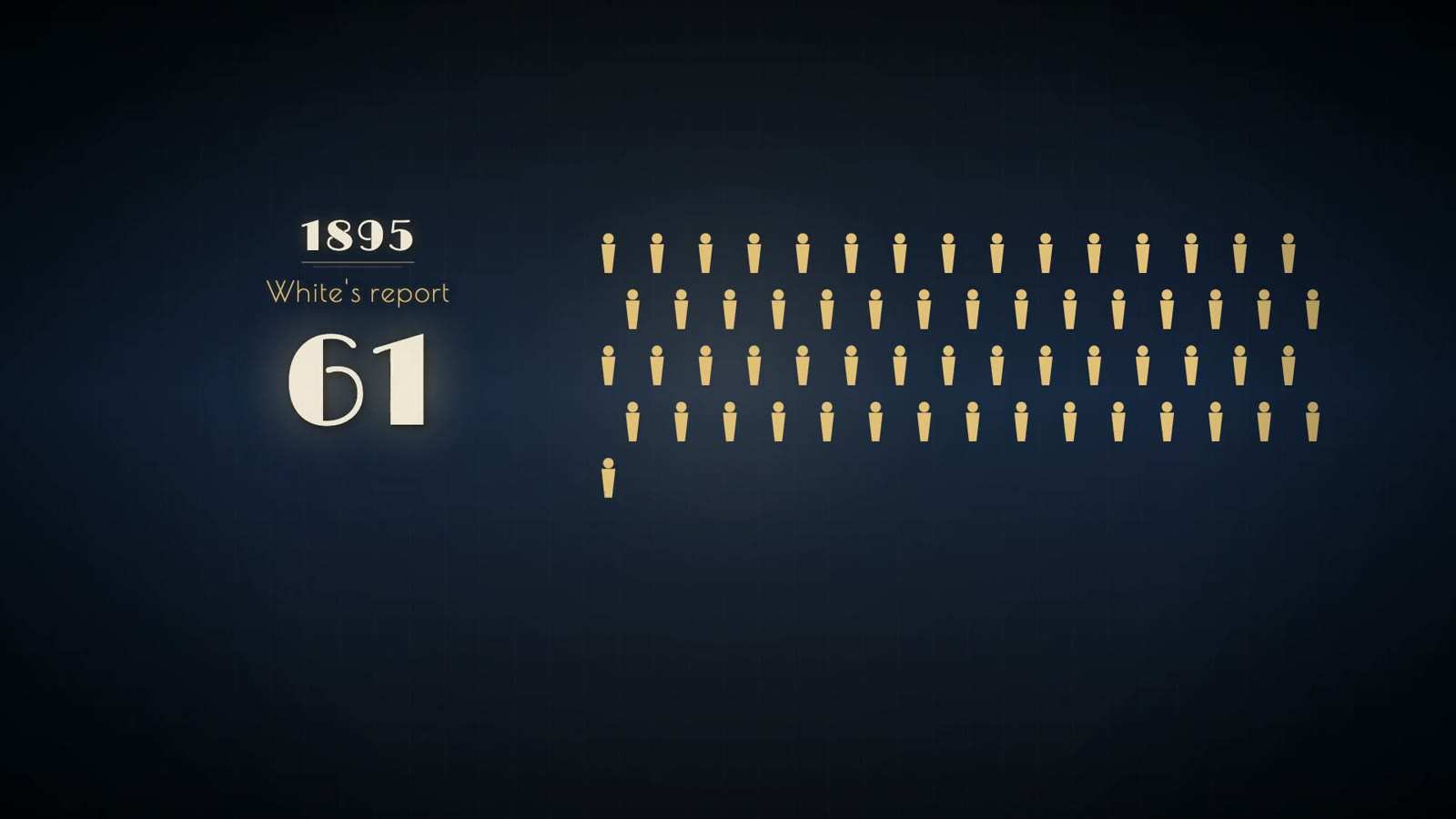
By 1895 White could report 111 castrated men. The prostate shrank rapidly in 87% and urinary symptoms improved in 83%, but 20 men (18%) died; excluding patients who were already moribund, mortality was 7%. probable
SourcesOthers took up the operation: Cabot reported 99 cases in 1896, and Fredrik Ramm wrote a Norwegian dissertation on it the same year.
-
Improvements in prostatectomy largely eliminated castration as a treatment for prostatic enlargement. probable
SourcesNicholson et al. give no date for the end of the practice; the dossier's 'about 1900' is its own estimate. The usual reasons given (deaths in frail men, inconsistent relief, mutilation, a better alternative) are inference; reports of mental disturbance after the operation could not be verified.
-
Arthur McGill's operation in Leeds on 24 March 1887 is counted as the first open prostatectomy in Britain.
Sources- BAUS Virtual Museum: Arthur Fergusson McGill Museum or society dead link
- Urology News: Urology in Leeds Secondary
The patient was a 53-year-old blacksmith; Berkeley Moynihan, then a dresser, identified the tissue (BAUS).
-
Accounts of how the gland came out differ. disputed
- Version 1
Operating for bladder stones, McGill saw a growth at the neck of the bladder and twisted it off (Urology News).
Sources- Urology News: Urology in Leeds Secondary
- Version 2
McGill had opened the bladder of a man with retention and was feeling the size of the prostate with his finger when it came away in his hand (BAUS).
Sources- BAUS Virtual Museum: Arthur Fergusson McGill Museum or society dead link
The film follows the first account.
- Version 1
-
The tissue is said to have come away in McGill's hand. probable
Sources- BAUS Virtual Museum: Arthur Fergusson McGill Museum or society dead link
BAUS reports it as hearsay ('it is said'), with McGill's reply: 'We must do this again.'
-
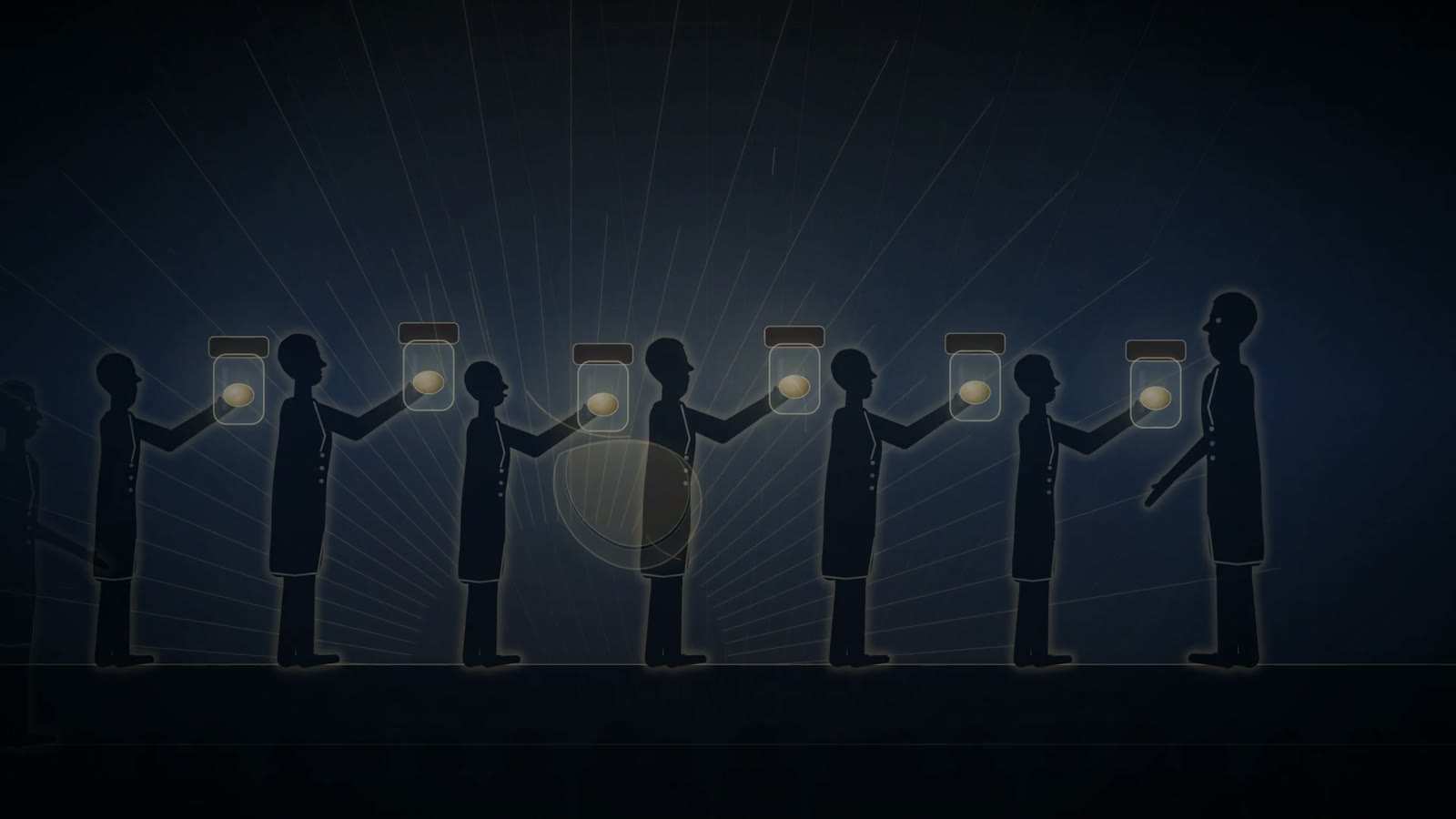
Two years later McGill showed his patients, each holding his own prostate in a jar, at the British Medical Association meeting in Leeds. probable
Sources- BAUS Virtual Museum: Arthur Fergusson McGill Museum or society dead link
- BAUS Virtual Museum: Suprapubic prostatectomy Museum or society
The jars are recorded from the BAUS Virtual Museum only; the dossier does not attribute them to a second, independent source.
-
Eugene Fuller published a clear method of complete enucleation of the benign prostate through the opened bladder in 1895. probable
Sources- BAUS Virtual Museum: Suprapubic prostatectomy Museum or society
One source (BAUS). The dossier cites Wikipedia for Fuller's birth and death places, not for the 1895 method. The film's 'of New York' is not recorded from these sources (see gaps).
-
Peter Freyer performed his first 'total enucleation' of the prostate in London on 1 December 1900 and published it in the BMJ in July 1901 as his own operation.
Sources- EAU History Office: Sir Peter Freyer Museum or society
- Wikipedia: Peter Freyer Secondary
- BAUS Virtual Museum: Suprapubic prostatectomy Museum or society
McGill (1887), Belfield (in an 1890 publication) and Fuller (1895) all preceded him (BAUS).
-
Freyer performed the operation more than a thousand times.
Sources- BAUS Virtual Museum: Suprapubic prostatectomy Museum or society
- Wikipedia: Peter Freyer Secondary
BAUS and Wikipedia both give totals above a thousand; the totals themselves differ (next claim).
-
Sources give different totals for Freyer's enucleations. disputed
- Version 1
1,625 cases, with a mortality rate of 5% (BAUS).
Sources- BAUS Virtual Museum: Suprapubic prostatectomy Museum or society
- Version 2
1,674 cases by 1920, by Freyer's own count; Morson later documented 1,337 (Wikipedia).
Sources- Wikipedia: Peter Freyer Secondary
- Version 3
1,000 cases reported in the BMJ in 1912, the last 200 with a mortality of 3% (EAU History Office).
Sources- EAU History Office: Sir Peter Freyer Museum or society
The film says only 'more than a thousand times'.
- Version 1
-
Freyer's claim to the operation caused controversy.
Sources- BAUS Virtual Museum: Suprapubic prostatectomy Museum or society
- EAU History Office: Sir Peter Freyer Museum or society
BAUS: 'a lot of anger and ill-feeling, both in America and in Leeds'; EAU: 'a lot of international controversy'. The film says New York; see conflicts. Fuller wrote that being the 'original scratcher' was Freyer's only valid claim (as quoted on Wikipedia; original not seen).
-
In 1874 Enrico Bottini cut the prostate through the urethra with an electrically heated blade.
Sources- Urology News: The prostatic punch Secondary
- Didusch Museum: Resectoscopes Museum or society
- Wallace 1973, New lamps for old (RSM presidential address; BAUS archive) Secondary
Wallace (1973, p. 457) describes a platinum blade heated by galvanic current. The Didusch Museum places the work in Pavia. The film calls the operation blind; the dossier records it so, but the sources read for the audit do not say it directly.
-
Hugh Hampton Young introduced his prostatic punch in 1909. probable
Sources- Urology News: The prostatic punch Secondary
- Didusch Museum: Resectoscopes Museum or society
Urology News dates the punch to 1 April 1909. The Didusch Museum gives 1909 for the death that prompted it, not for the punch itself.
-
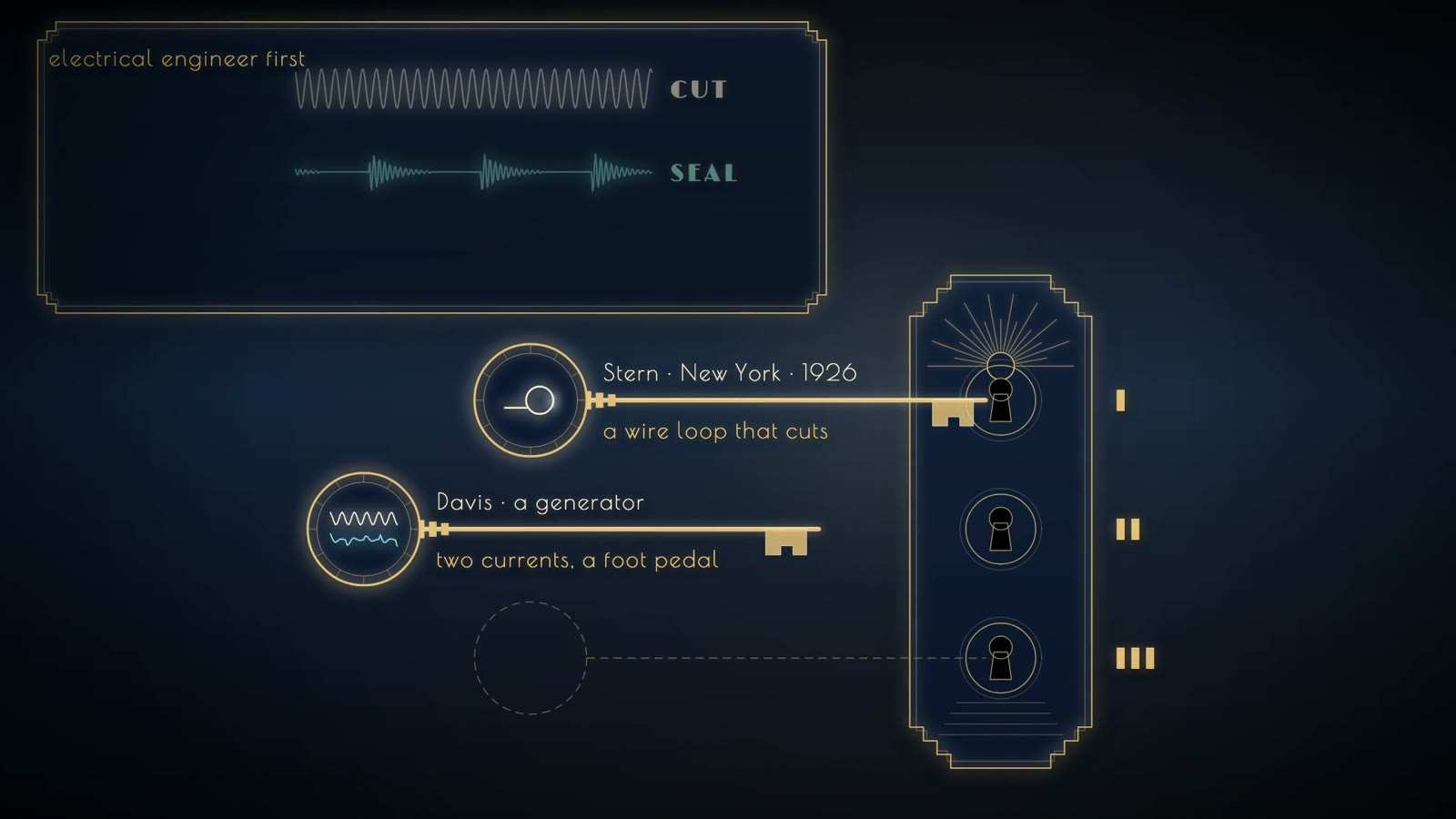
In January 1926 Maximilian Stern presented to the New York Academy of Medicine a resectoscope whose tungsten wire loop cut with high-frequency current. It cut well but stopped bleeding poorly.
Sources- BAUS Virtual Museum: TURP (transurethral resection of the prostate) Museum or society
- Didusch Museum: Resectoscopes Museum or society
- Urology News: TURP Secondary
-
Theodore Davis, an electrical engineer before he qualified in medicine, built with G. H. Liebel a generator that cut with one current and coagulated with another, switched by foot pedals.
Sources- Didusch Museum: The transurethral prostatic resection technique of T. M. Davis Museum or society
- BAUS Virtual Museum: TURP (transurethral resection of the prostate) Museum or society
Davis worked as an engineer from 1905 to 1909 and took his MD at Maryland in 1914. He showed films of resections at the 1931 AUA meeting and reported 966 resections with 7 deaths.
-
In 1931 Joseph McCarthy combined Stern's loop, Davis's two currents and his own panendoscope, with its Foroblique lens, in a Bakelite sheath. The Stern-McCarthy resectoscope became the standard instrument internationally.
Sources- BAUS Virtual Museum: TURP (transurethral resection of the prostate) Museum or society
- Urology News: TURP Secondary
- Didusch Museum: Resectoscopes Museum or society
The film adds that transurethral resection remained the standard operation for the rest of the century; the kit does not state that duration (see gaps).
-
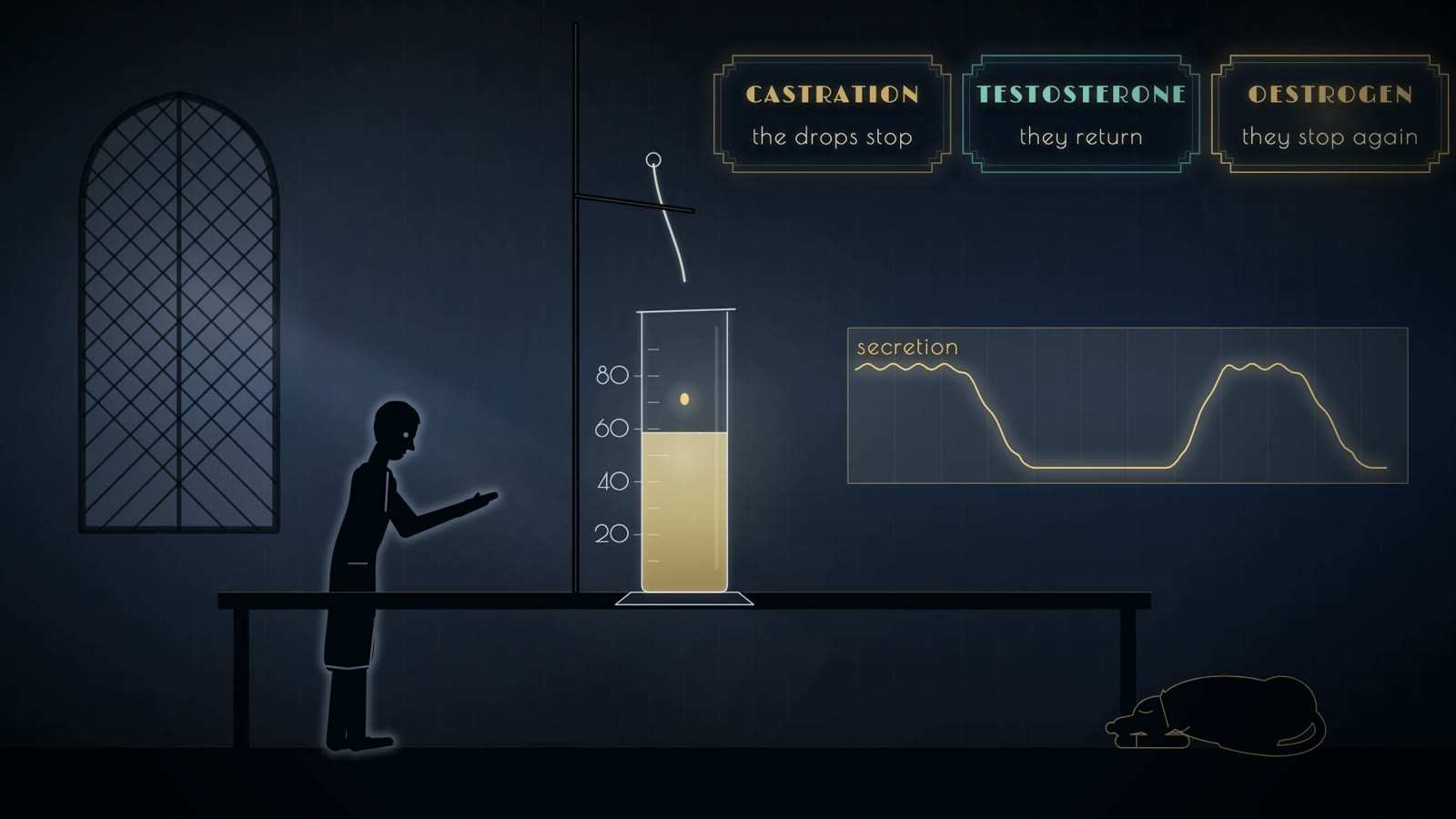
Huggins and colleagues isolated the dog prostate so that its secretion could be collected and measured over periods of months. Castration stopped the secretion, testosterone restored it, and oestrogen suppressed it.
SourcesPublished in J Exp Med in 1939. The exact surgical method of isolation is in a figure that was not read for the kit. The film sets the work in Chicago, which these sources are not recorded as stating (see gaps).
-
Some of the dogs had prostate tumours. In his Nobel lecture Huggins called it good fortune that some of his group's metabolic experiments had been done on dogs, the only species of laboratory animal in which tumours of the prostate occur.
SourcesHuggins, Nobel lecture, 1966.
-
In 1938 Alexander and Ethel Gutman described an acid phosphatase in the serum of patients with metastasising carcinoma of the prostate.
The dossier calls this the first serum marker for prostate cancer, but the paper itself is the only source cited. The film places the Gutmans in New York and ties the rise to spread in bone; neither detail is stated in the kit (see gaps).
-
In 1941 Huggins and Hodges reported that castration or oestrogen lowered the serum phosphatases of men with metastatic prostate cancer, and that injected androgen raised them. probable
SourcesCancer Res 1941;1:293-297. Two sources confirm the citation and the title, which names castration, oestrogen, androgen injection and serum phosphatases; the dossier records the direction of the changes without saying which source states it. One review gives eight men, some with bone metastases. A second 1941 paper, with Stevens, dealt with castration in advanced disease (probable).
-
A popular magazine reports that the first patient, who had bone pain, was free of pain within hours of the operation. probable
Sources- Cancer Today magazine on Huggins Secondary
One popular source. The film's general 'the pain eased' rests on this account of one patient (see gaps).
-
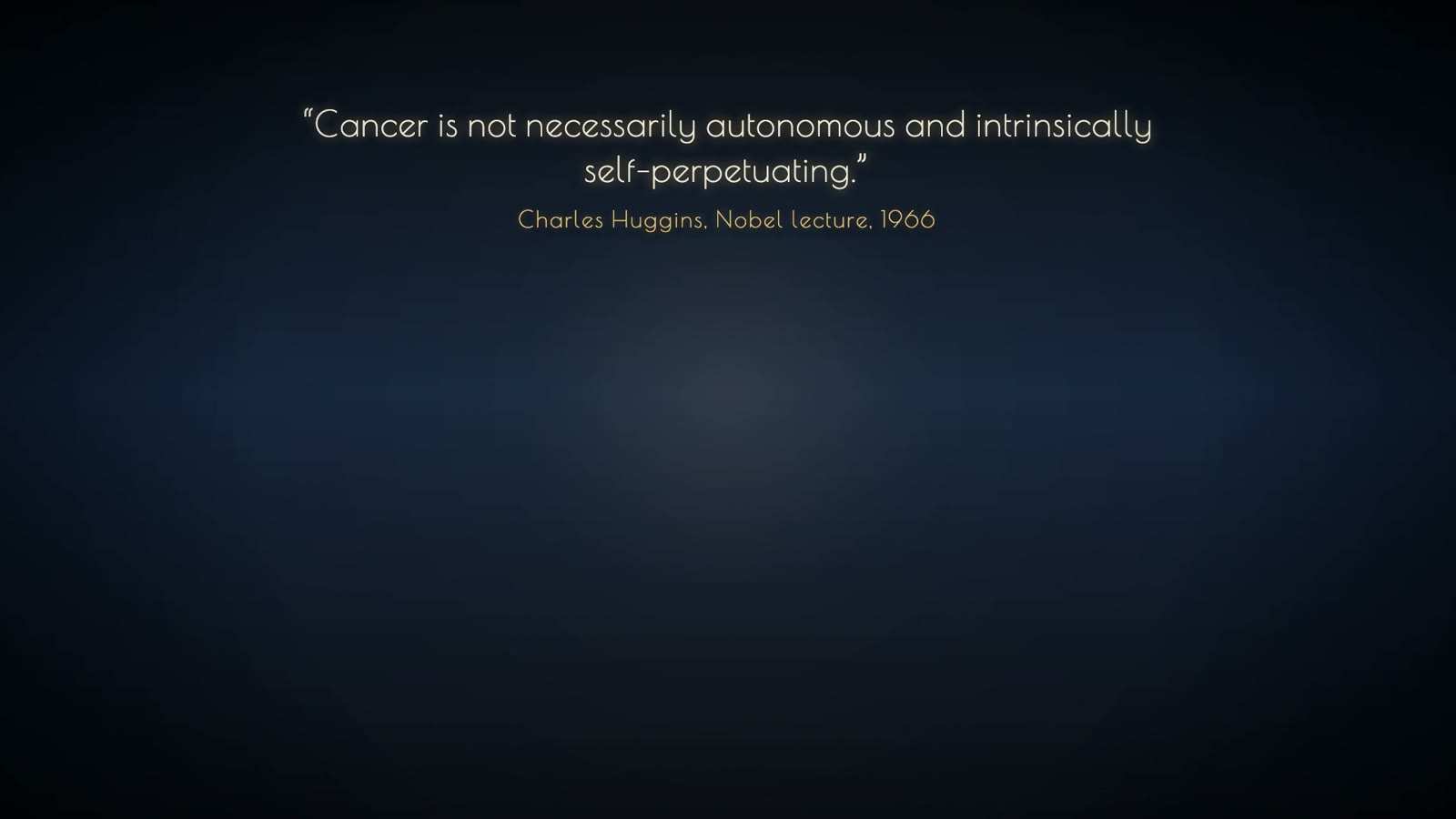
Huggins concluded that cancer is not necessarily autonomous. Of the first 21 men treated by orchiectomy for far-advanced disease, 4 survived more than 12 years.
Sources -
Huggins shared the 1966 Nobel Prize in Physiology or Medicine, with Peyton Rous, for discoveries concerning hormonal treatment of prostatic cancer.
Sources -
Abraham Morgentaler argues that the belief that testosterone feeds prostate cancer, which held for about sixty years, rested on very thin data in the 1941 work: in effect one previously untreated man given testosterone for 18 days. probable
SourcesMorgentaler's reading, as reported by STAT News, and presented by the film as an argument. Brendler, Chase and Scott (1949) record that Huggins and Hodges gave androgen in smaller amounts and for shorter periods to three patients.
-
Before nerve-sparing surgery, impotence after radical prostatectomy was nearly universal, and surgeons believed the nerves of erection ran through the prostate.
Sources -
Walsh deduced that a common venous trunk ran over the urethra and tied it; in his words, 'the bleeding nearly stopped'. probable
SourcesThe quotation is from OncLive; Hopkins (2024) confirms the concept. The dossier dates this to the late 1970s without a source.
-
In 1977 a patient of Walsh's reported, after radical prostatectomy, that he was potent.
Sources -
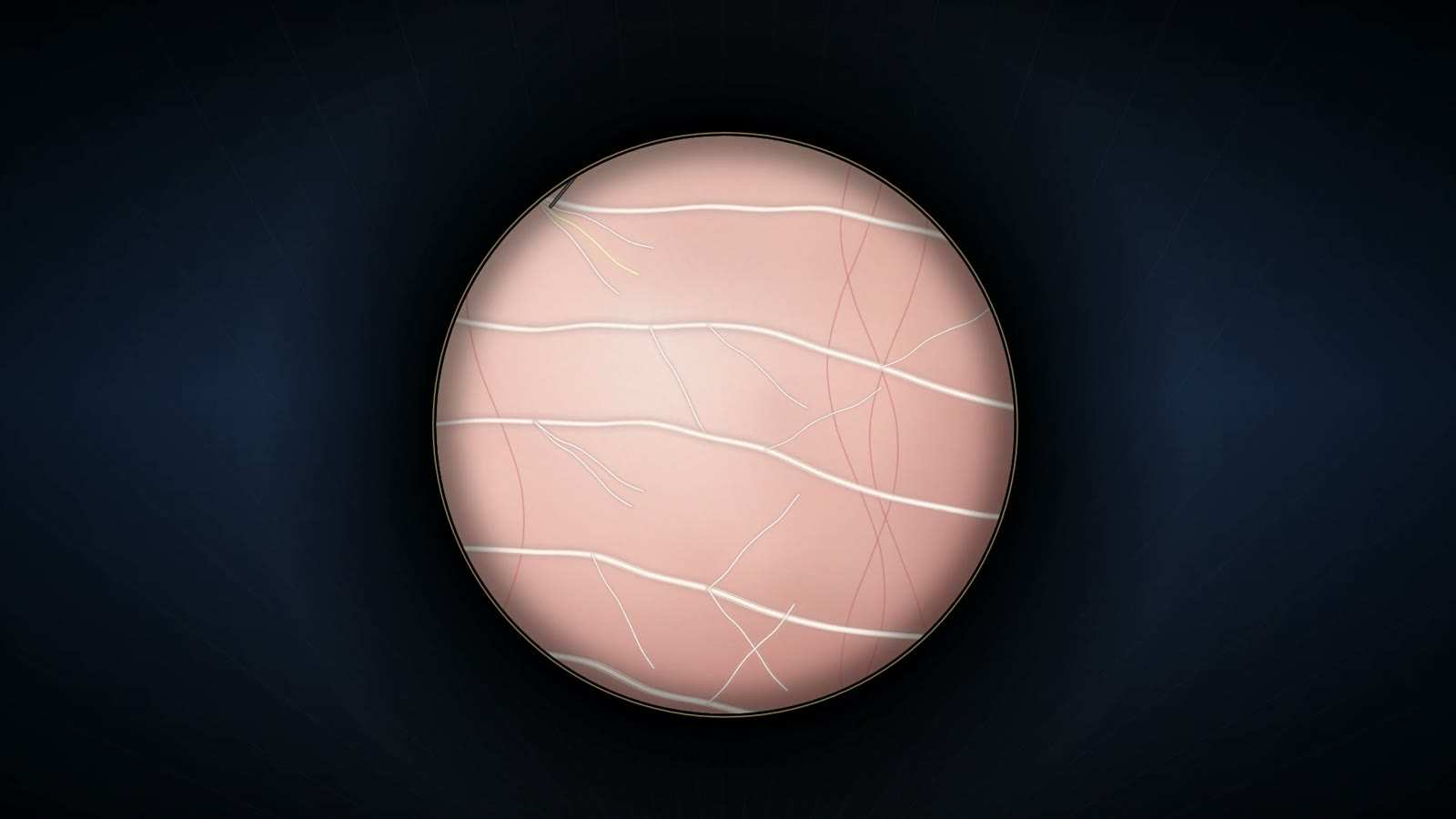
On 13 February 1981, in Donker's anatomy laboratory in Leiden, Walsh asked Pieter Donker, a retired Dutch urologist who was dissecting the nerves to the bladder of a stillborn infant under a microscope, where the nerves to the penis ran.
Sources- Johns Hopkins Medicine 2020: 40th anniversary of a lifesaving discovery Secondary
- Johns Hopkins Medicine 2024: Radical innovator Secondary
- EAU Today: Nerve-sparing radical prostatectomy, a European discovery? Museum or society dead link
The two had met in March 1977 at a dinner during an international conference. Nerves are easier to trace in such a specimen than in an adult cadaver.
-
Three hours later they had located the nerves, outside the prostate.
Sources- Johns Hopkins Medicine 2020: 40th anniversary of a lifesaving discovery Secondary
- Johns Hopkins Medicine 2024: Radical innovator Secondary
- EAU Today: Nerve-sparing radical prostatectomy, a European discovery? Museum or society dead link
-
On 26 April 1982, at Johns Hopkins, Walsh performed the first operation designed to preserve these nerves.
Sources- Johns Hopkins Medicine 2020: 40th anniversary of a lifesaving discovery Secondary
- OncLive: Walsh's quest to understand male anatomy Secondary
- EAU Today: Nerve-sparing radical prostatectomy, a European discovery? Museum or society dead link
The patient, a 52-year-old professor of management, recovered potency quickly. Walsh and Donker published their findings in the Journal of Urology in 1982.
-
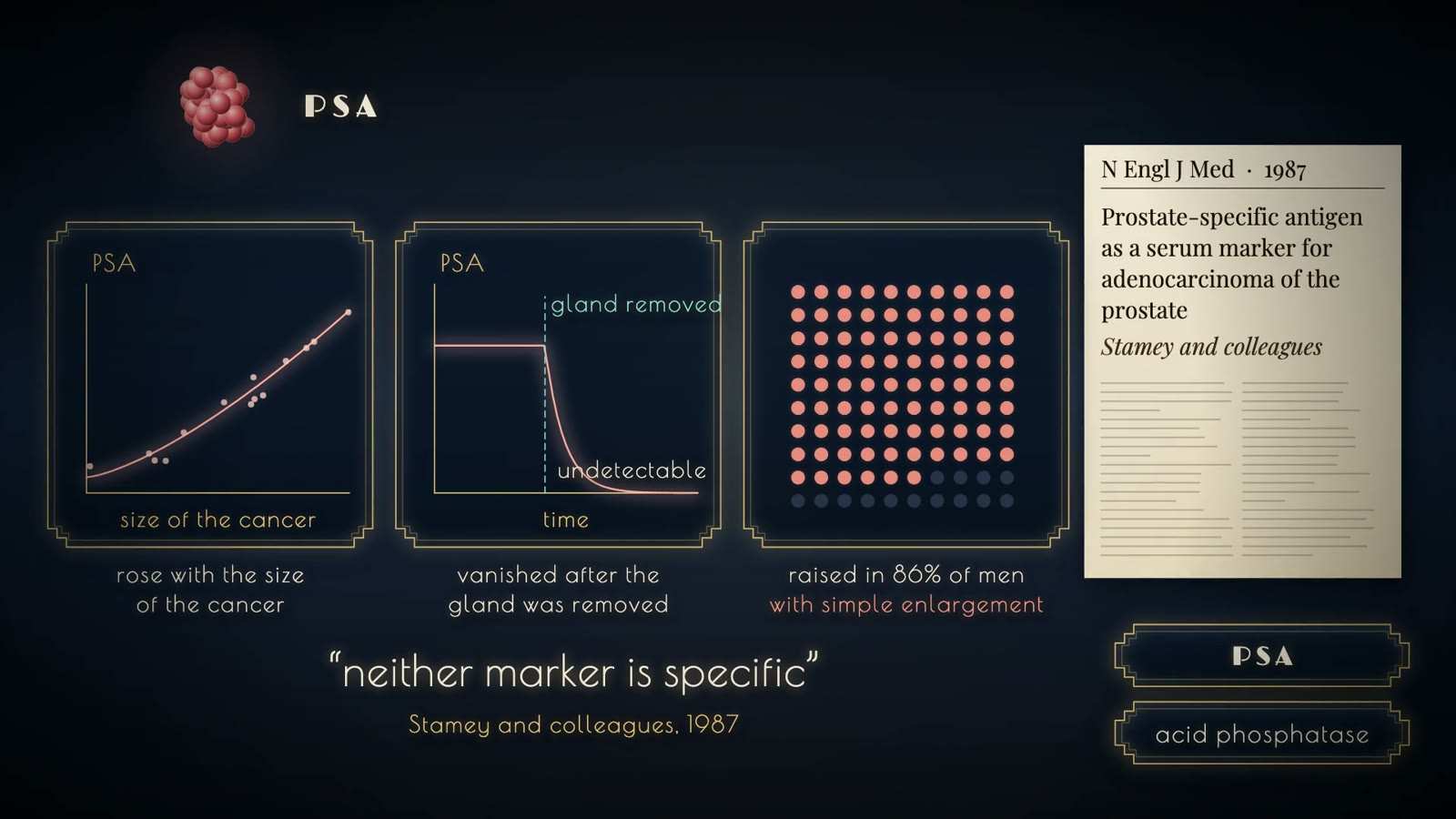
In 1987 Stamey and colleagues proposed prostate-specific antigen as a serum marker for prostate cancer. It rose with stage and tumour volume and became undetectable after radical prostatectomy.
SourcesNEJM 1987;317:909-916; 2,200 sera from 699 patients. PSA had been measured in serum from 1980 and a commercial test released in 1986 (both probable); see conflicts.
-
The same paper found PSA raised in 86% of men with benign prostatic hyperplasia and concluded that, since both PSA and prostatic acid phosphatase may be raised in that condition, 'neither marker is specific'.
Sources -
In 2009 two large screening trials reported. The European ERSPC found fewer prostate cancer deaths with screening (rate ratio 0.80 at a median of nine years); the American PLCO found no reduction. probable
SourcesAt 16 years ERSPC still showed a rate ratio of 0.80, with 570 men invited and 18 diagnosed to prevent one death; at about 17 years PLCO's rate ratio was 0.93. Graded probable: one secondary source (NCI PDQ) for both trials.
-
PLCO's comparison arm was heavily tested: 45% of men had had a PSA test in the three years before randomisation, and up to 52% of the usual-care arm had annual PSA tests. probable
SourcesOne secondary source (NCI PDQ). The film concludes that the trial compared screening with less screening; that reading is the dossier's, not a source statement (see gaps).
-
The US Preventive Services Task Force recommended against PSA screening (grade D) on 15 May 2012 and, on 8 May 2018, made it an individual decision for men aged 55 to 69 (grade C). An update is in progress.
SourcesThe 2018 statement kept grade D for men of 70 and over.
Myths corrected
-
Unsupported as stated. Herophilus of Alexandria named the prostate.
-
False. Vesalius first drew the prostate in the Fabrica of 1538.
-
False. Massa described the prostate in 1526.
-
Misspelling. The gland is the 'prostrate' gland.
-
False. Huggins discovered acid phosphatase as a marker of prostate cancer.
-
False. Huggins won the 1966 Nobel Prize alone.
-
Overstated. Huggins's 1941 work proved that testosterone causes prostate cancer.
-
Half true. Before 1982 every man was left impotent by radical prostatectomy.
-
False. Walsh found the nerves of erection on his own, by dissecting an adult cadaver.
-
False. PSA is a test for prostate cancer.
-
Unsupported. Richard Ablin invented the PSA test.