Chapter X
Without the Knife
Boston, Munich, St Louis, Frankfurt, 1930 to today
Watch this chapter 57:42 in the filmRuns 5 min 30 s
Summary
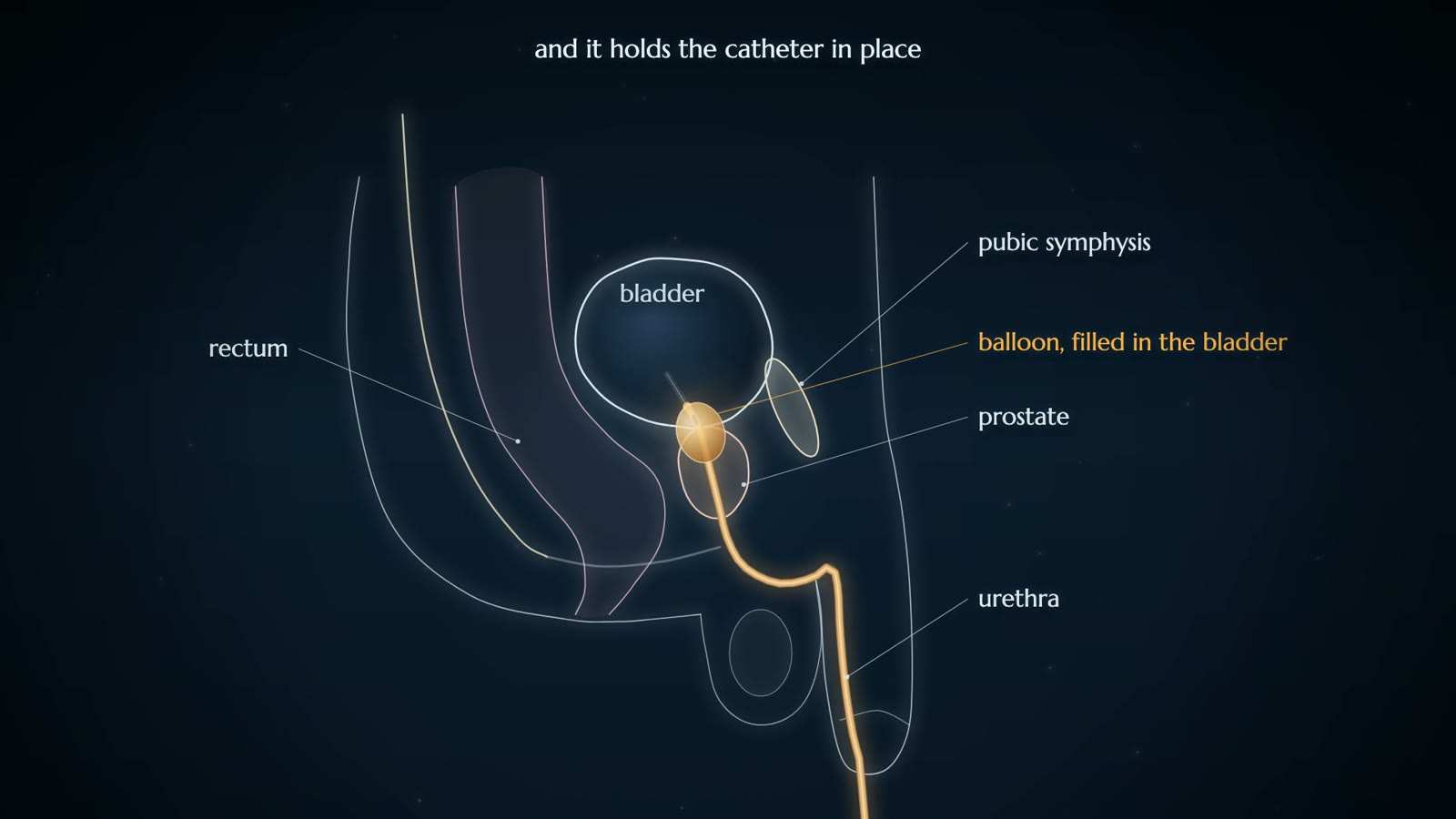
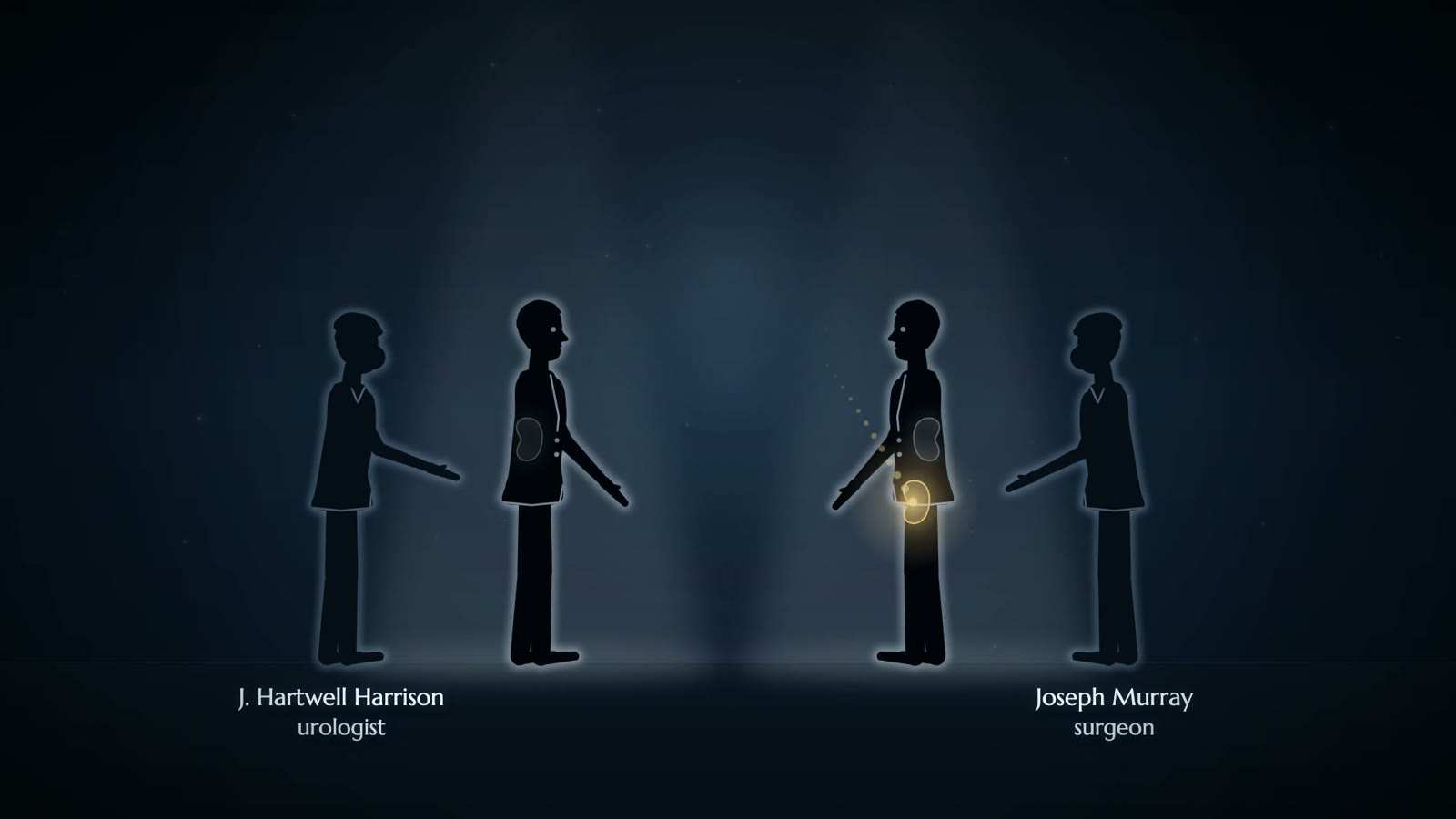
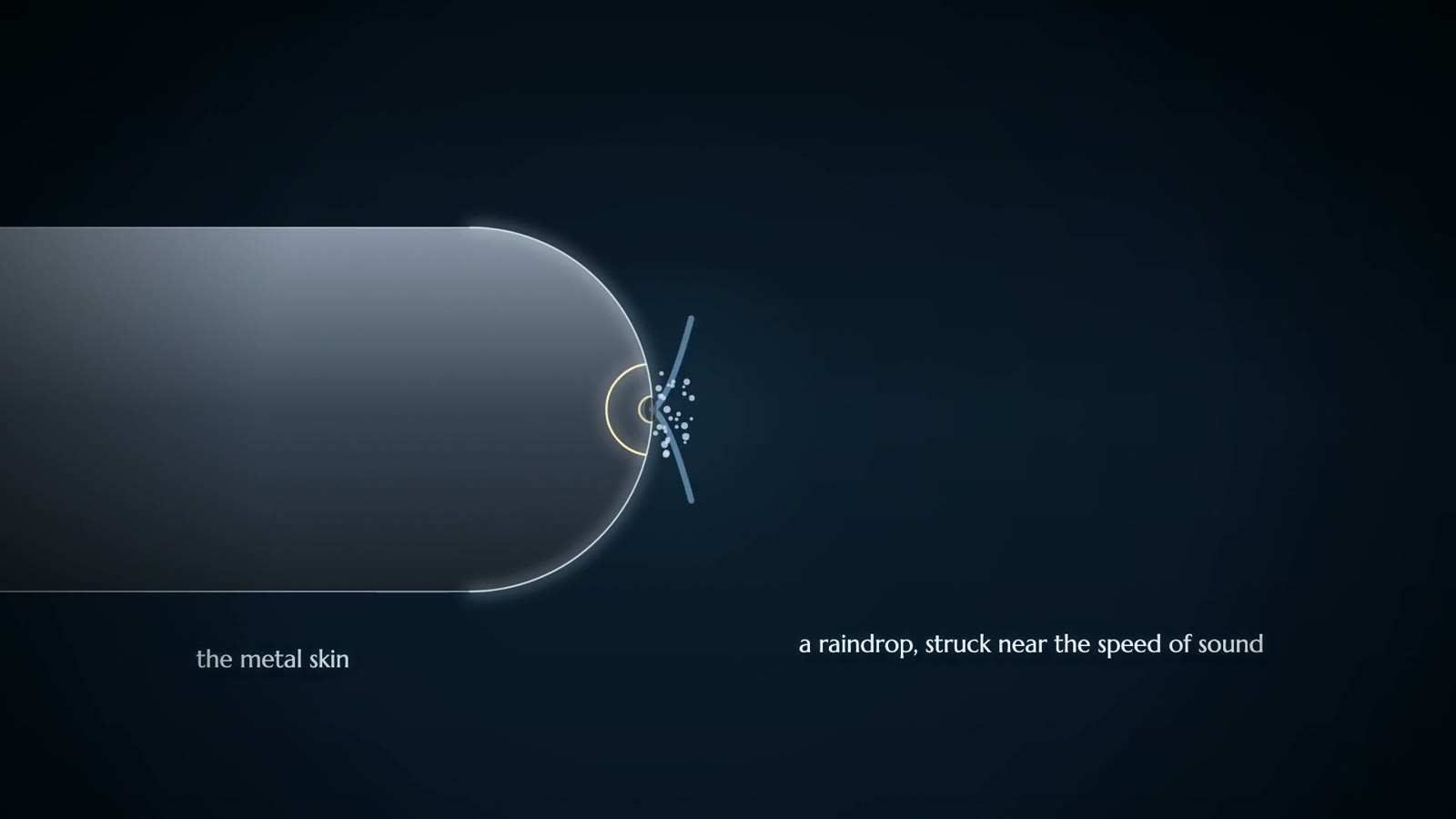
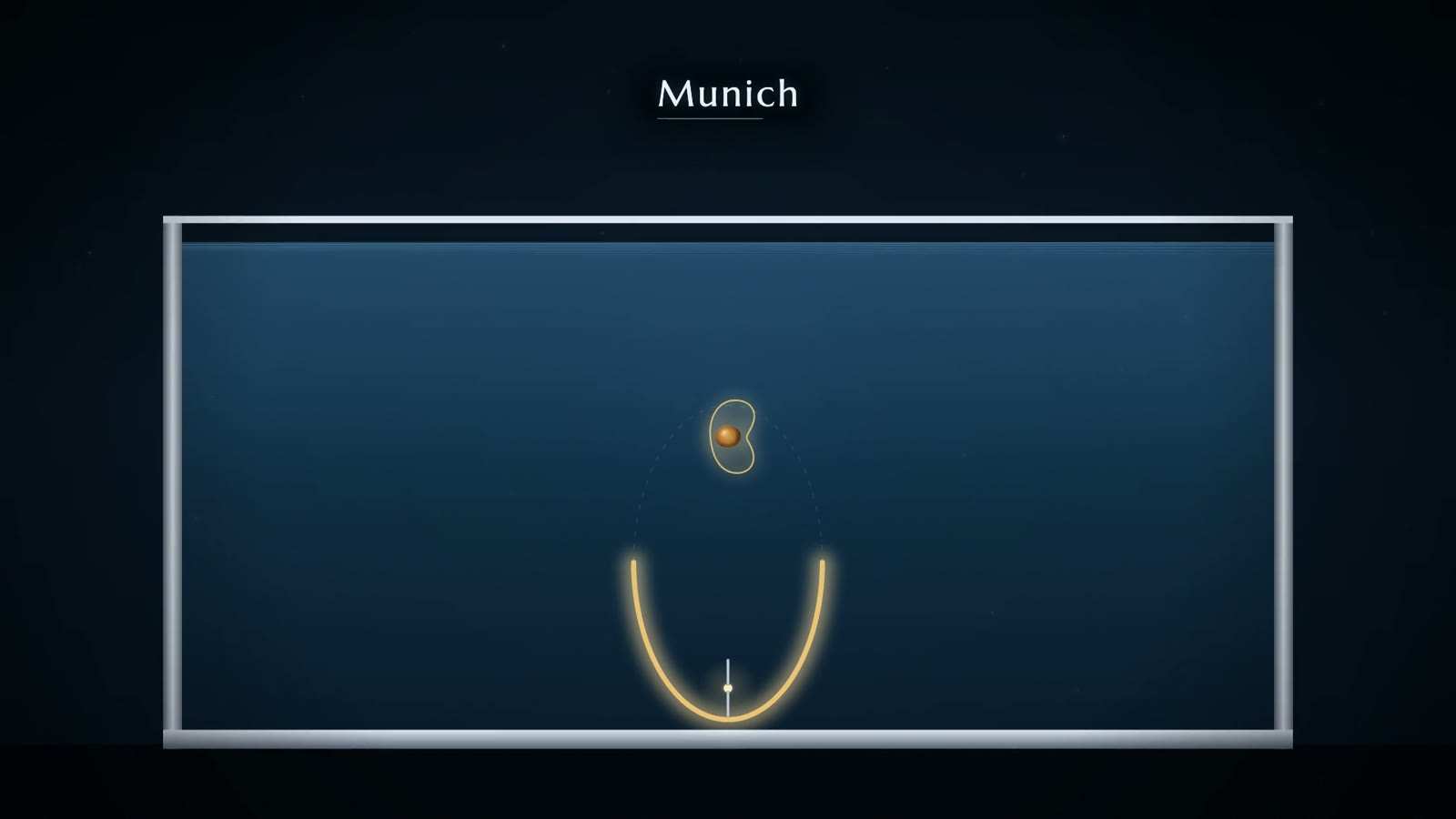
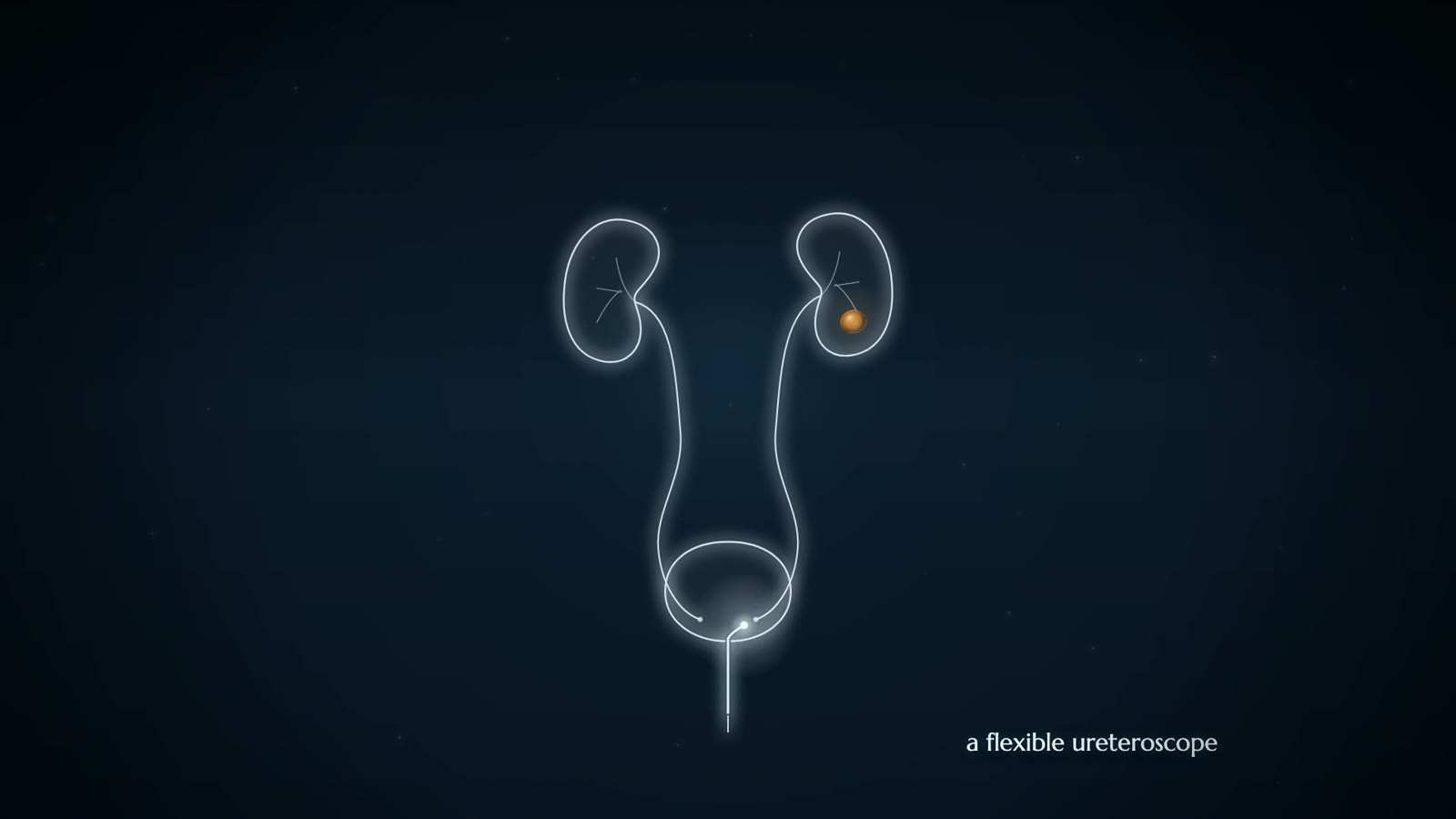
Chapter X covers the twentieth century, as urological operations moved away from the open incision. Frederic Foley's balloon catheter, devised around 1930 to control bleeding after prostate surgery and to stay where it is put, carries his name, although the patent went, after a dispute that reached the courts, to Paul Raiche of the Davol Rubber Company. On 23 December 1954 in Boston the urologist Hartwell Harrison removed a kidney from Ronald Herrick, and Joseph Murray placed it in his identical twin Richard; skin grafts had shown the brothers to be identical, and the team consulted physicians and clergy before operating on a healthy donor. The stone returns by way of aircraft research. Dornier engineers studying raindrop damage found that a shock wave could pass through a hand without harm, and a Munich group used an ellipsoidal reflector to focus an underwater spark on a kidney stone, treating the first patient on 7 February 1980. Percutaneous and ureteroscopic access and laser fragmentation followed; the film ties them back to Ammonius, who broke stones rather than enlarge the wound. Laparoscopy reached urology with Ralph Clayman's nephrectomy in St Louis in 1990, though early laparoscopic prostatectomy was slow and showed no advantage. Robotic prostatectomy began in Frankfurt in 2000, grew through Mani Menon's programme in Detroit and spread faster than the evidence. A single-port system was cleared for urology in 2018.
Watch, shot by shot
-

-
-
-
-
-
-
What the film says, and the evidence
Verified claims are shown plain. probable means one reliable source; disputed means the sources disagree, and both versions are shown. Unverified material is not published here.
-
Frederic Foley, an American urologist, devised a self-retaining balloon catheter: first described in 1929 to control bleeding after prostatectomy, demonstrated in 1935 and published in 1937 as a one-piece latex 'hemostatic bag catheter'.
Sources- Wikipedia: Frederic Foley Secondary
- Wikipedia: Foley catheter Secondary
- F. E. B. Foley, A hemostatic bag catheter: one piece latex rubber structure for control of bleeding and constant drainage following prostatic resection, Journal of Urology 1937; 38:134-139 (title and citation as given on Wikipedia) Primary
The film's 'around 1930' covers the 1929 description. Wikipedia's catheter article places Foley in Boston in the 1930s; its biography of Foley names him later chief of urology at Ancker Hospital, St Paul.
-
Paul Raiche of the Davol Rubber Company received a patent on the balloon catheter in 1936. Foley, who applied that October, won before the Patent Office Board of Appeals, but a court reversed the decision and the patent stayed with Raiche. probable
Sources- Wikipedia: Frederic Foley Secondary
One detailed source. The screenplay note attributes it to Wikipedia citing Mattelaer and Billiet.
-
C. R. Bard distributed the devices as 'Foley catheters' from 1935. probable
Sources- Wikipedia: Frederic Foley Secondary
The film's 'the name on the catheter stayed Foley's' is the dossier's reading of this fact.
-
On 23 December 1954, at the Peter Bent Brigham Hospital in Boston, a kidney from Ronald Herrick was transplanted into his identical twin, Richard.
Sources- Wikipedia: Joseph Murray Secondary
- Wikipedia: Kidney transplantation Secondary
- Murray, Nobel lecture, 8 December 1990 Primary
The film's 'dying of kidney failure' is not recorded from these sources (see gaps).
-
Skin grafted from each twin to the other established that they were genetically identical.
SourcesA popular retelling has the twins fingerprinted at a police station; that story is not in Murray's lecture (see myths).
-
The urologist J. Hartwell Harrison removed the donor kidney and Joseph Murray transplanted it; John Merrill led the nephrology team.
Sources- Murray, Nobel lecture, 8 December 1990 Primary
- Wikipedia: John Hartwell Harrison Secondary
-
The kidney worked at once, and Richard lived eight more years.
Sources- Wikipedia: Joseph Murray Secondary
- Murray, Nobel lecture, 8 December 1990 Primary
He married and had two children. The operation took about five and a half hours (probable). The film's further claim, that this was the first organ graft to last years rather than weeks, is not stated in the kit (see gaps).
-
Murray described it as the first time in medical history that a healthy person underwent major surgery not for his own benefit; before going ahead, the team consulted physicians and clergy.
SourcesAsked whether the hospital would guarantee Ronald lifelong care, Harrison said 'Of course not', then asked Ronald whether he thought anyone in the room would ever refuse to take care of him.
-
Murray shared the 1990 Nobel Prize in Physiology or Medicine with E. Donnall Thomas, for work on organ and cell transplantation.
Sources- Wikipedia: Joseph Murray Secondary
- Murray, Nobel lecture, 8 December 1990 Primary
-
The aircraft firm Dornier studied the pitting of aircraft skins near the speed of sound, caused by shock waves formed in front of raindrops, as part of research on how shock waves act on solid bodies.
SourcesChaussy et al. (2007) also mention micrometeorites. The research was funded by the German Ministry of Defence (probable).
-
A Dornier engineer in contact with the shock-wave apparatus felt something like an electric shock.
Sources- Chaussy, Eisenberger and Forssmann 2007, Extracorporeal shockwave lithotripsy (ESWL): a chronology (J Endourol 21:1249-1253) Primary
- Xu and Xu, history of shock wave lithotripsy (Atlantis Press) Secondary
- Malinaric et al., International Journal of Environmental Research and Public Health 2023; 20(5):4127 Secondary
The event is verified. Chaussy et al. (2007) describe 'pain as from an electrical shock'; Xu and Xu say the engineer touched the steel target and 'the contact area was not hurt', the only source for the film's 'his skin was unharmed'. Two secondary sources date the event to 1966; the pioneers' own 2007 chronology gives no year, and the film gives none.
-
The lithotripter produced shock waves with an underwater spark and focused them on the stone through a semi-ellipsoid: the spark lay at one focus and the stone at the other, and water carried the wave into the body. Two X-ray systems in two planes located the stone. probable
SourcesFrom the first-hand chronology by the Munich pioneers, the only source; the dossier grades items that rest on it alone probable.
-
Before treating people, the Munich group implanted freshly removed human kidney stones into the dilated collecting systems of dogs. probable
SourcesAt Brendel's Institute of Surgical Research; one first-hand source.
-
The first patient was treated on 7 February 1980 in the Department of Urology of the Munich University Hospital, on the Grosshadern campus.
SourcesThe 2007 chronology names Chaussy, Forssmann and Jocham as treating the first patient. First results appeared in The Lancet in December 1980. The film's 'lying in a bath of water' is not recorded from these sources (see gaps); localisation by X-ray is in the previous claim.
-
In the same years stones came to be reached through a puncture in the back: in 1976 Fernström and Johansson described removing kidney stones through a percutaneous nephrostomy under radiological control.
Sources- BAUS Virtual Museum: Nephroscopy and PCNL Museum or society
- S. R. Patel, S. Y. Nakada, The modern history and evolution of percutaneous nephrolithotomy, Journal of Endourology 2014 Secondary
Earlier steps: Rupel and Brown removed a stone through a surgical nephrostomy track in 1941, and Goodwin described percutaneous nephrostomy in 1955.
-
Purpose-built ureteroscopes followed: in 1980 Pérez-Castro, with Karl Storz, produced the first rigid ureteroscope made for the purpose, used for stone treatment the following year. probable
Sources- L. A. Whitehurst, B. K. Somani, Urolithiasis 2018 (history of ureteroscopy) Secondary
12 F and 50 cm long, with a separate optic and working channel. Semi-rigid ureteroscopes followed in 1989.
-
Laser lithotripsy was developed in the 1980s, and holmium:YAG lasers became the standard for breaking stones from the mid-1990s. probable
Sources- Wikipedia article on laser lithotripsy, as cited in research/03 §16 (URL not recorded in the kit) Secondary
The first clinical year for holmium is not verified. The film's closing line links these methods to Ammonius, whom Celsus credits with breaking a stone too large to remove whole (see the greece chapter).
-
In 1990 at Washington University, St Louis, Ralph Clayman's team performed the first laparoscopic nephrectomy, on an 85-year-old woman. The 190 g kidney was placed in a sack, broken up and removed through an 11 mm incision.
Sources- R. V. Clayman et al., Journal of Urology 1991; 146:278-282, and New England Journal of Medicine 1991; 324:1370-1371 (Europe PMC abstract, PMID 1830346) Primary
- Wikipedia: Ralph Clayman Secondary
Published in 1991 in the Journal of Urology and the NEJM. The exact day, often given as 25 June 1990, is not verified.
-
The first laparoscopic radical prostatectomies, nine cases from 1991 to 1995, took a mean of 9.4 hours, and their surgeons concluded that the approach offered no advantage over open surgery.
Sources- W. W. Schuessler, P. G. Schulam, R. V. Clayman, L. R. Kavoussi, Urology 1997; 50:854-857 (Europe PMC abstract, PMID 9426713) Primary
- Wikipedia: Radical prostatectomy Secondary
-
In 2000 Binder and Kramer in Frankfurt performed the first robot-assisted radical prostatectomy, reported in 2001. probable
Sources- J. Binder, W. Kramer, Robotically-assisted laparoscopic radical prostatectomy, BJU International 2001; 87:408-410 Primary
- Wikipedia: Robot-assisted surgery Secondary
The citation of the 2001 report is verified; the year of the operation, 2000, and its place as the first rest on Wikipedia alone. The month, often given as May 2000, is not verified.
-
Mani Menon built what has been called the first cancer-oriented robotics programme in the world, at the Vattikuti Urology Institute of the Henry Ford Hospital, Detroit. probable
Sources- Wikipedia article on Mani Menon, as quoted in research/05 §10.1 (URL not recorded in the kit) Secondary
The programme's start year and the donation behind it are not verified, nor are the film's 'thousands of cases' and its worldwide spread (see gaps).
-
Robotic prostatectomy was adopted rapidly despite a lack of high-quality evidence of better cancer control, safety or cost-effectiveness than open surgery.
Sources- W. T. Lowrance et al. 2010, abstract read on Europe PMC (PMID 21103791) Primary
The film's further statements, that head-to-head trials show no gain in cure or function but much less bleeding, cite a 2016 trial that is named only in the screenplay note and credits (see gaps).
-
In 2018 the US FDA cleared a single-port robotic system for urological procedures suited to a single-port approach.
SourcesThe dossier gives the clearance date as 26 April 2018; the screenplay note gives 31 May 2018 (see conflicts).
Myths corrected
-
False. Frederic Foley patented the catheter that bears his name.
-
Unsupported. The Herrick twins were proved identical by fingerprinting at a police station.
-
False. Joseph Murray performed the first successful kidney transplant on his own.
-
Conflated. Lithotripsy began with a single discovery in 1966, when raindrop damage to a jet revealed that shock waves could break stones.
-
False. Eisenberger treated the first patient with shock-wave lithotripsy.